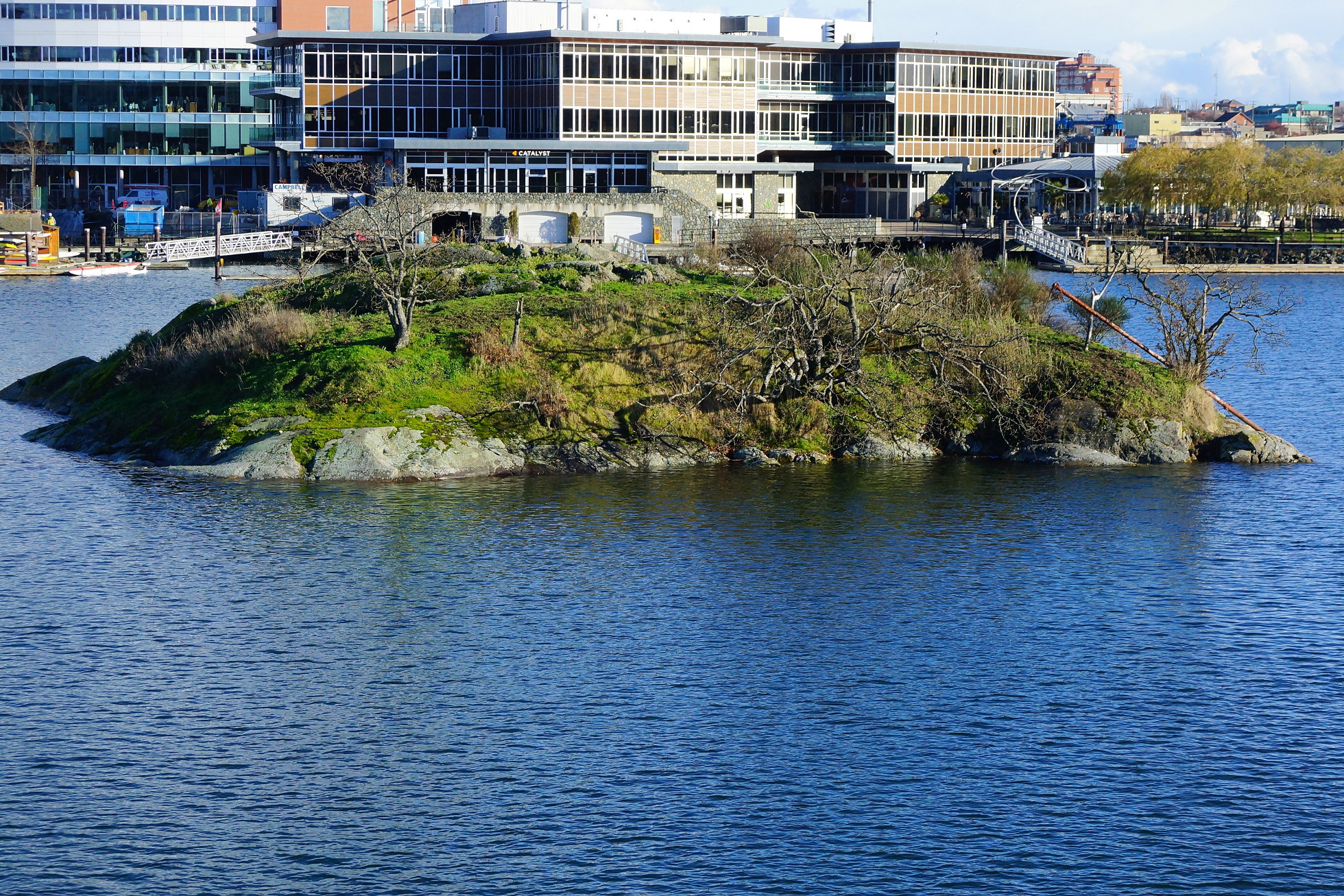
Towards the middle of the Selkirk Waters lies this small, rocky island. Local First Nations people often used such small islands for burials. The one pictured above is now called Halkett Island. A plaque on the Selkirk Walkway reads as follows:
In 1850, the "Island of the Dead" contained subsurface burials, but was mostly covered with small sheds, burial boxes and canoes containing human remains. The deceased were often placed in a fetal position and wrapped in a cedar bark mat. Adults were placed in a European-made, metal trimmed trunk and children were often placed in wooden cracker boxes.
Life sized carved wooden memorial figures representing prominent individuals were a common feature of burial locations.
The Lekwungen people, from the old Songhees reserve across the water, came to the island at twilight for feeding of the dead ceremonies. Sticks with chunks of sap were thrown into a fire to keep it blazing until midnight. Ritual words and chanting proceeded, as food to feed the dead was thrown into the fire.
Burials were no longer placed here after 1867, when a fire set by three Victoria boys got out of control and burned off the island. The boys' parents were heavily fined under the Indian Graves Protection Act. The island was taken away from the Songhees in 1924 by a Federal Indian Reserve Commission, but was restored to them by court order in 1993.
Joseph Pemberton, Victoria's most prolific early map maker, gave the name Halkett to the island in 1851. The Halketts were a well known, prominent British Navy family at the time.
(From a plaque placed on the shoreline near Halkett Island by the City of Victoria)
Custom Search
Showing posts with label Halkett Island. Show all posts
Wednesday, October 25, 2017
Tuesday, June 2, 2015
Halkett Island
Local Native Peoples used small islands for burials. The one pictured above is now called Halkett Island. A plaque on the Selkirk Walkway reads as follows:
(From a plaque placed on the shoreline near Halkett Island by the City of Victoria)
In 1850, the "Island of the Dead" contained subsurface burials, but was mostly covered with small sheds, burial boxes and canoes containing human remains. The deceased were often placed in a fetal position and wrapped in a cedar bark mat. Adults were placed in a European-made, metal trimmed trunk and children were often placed in wooden cracker boxes.
Life sized carved wooden memorial figures representing prominent individuals were a common feature of burial locations.
The Lekwungen people, from the old Songhees reserve across the water, came to the island at twilight for feeding of the dead ceremonies. Sticks with chunks of sap were thrown into a fire to keep it blazing until midnight. Ritual words and chanting proceeded, as food to feed the dead was thrown into the fire.
Burials were no longer placed here after 1867, when a fire set by three Victoria boys got out of control and burned off the island. The boys' parents were heavily fined under the Indian Graves Protection Act. The island was taken away from the Songhees in 1924 by a Federal Indian Reserve Commission, but was restored to them by court order in 1993.
Joseph Pemberton, Victoria's most prolific early map maker, gave the name Halkett to the island in 1851. The Halketts were a well known, prominent British Navy family at the time.
(From a plaque placed on the shoreline near Halkett Island by the City of Victoria)
Wednesday, December 11, 2013
Halkett Island
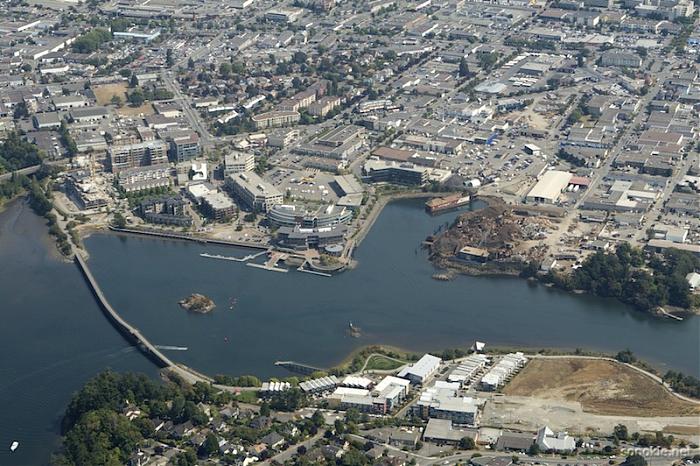
In the centre of the Selkirk Waters lies this tiny island, Halkett Island, here looking surprisingly verdant despite the freezing temperatures. It is also known as Deadman's Island because it was used as a burial place by First Nations people. There's a good short article about the island's history on Wikimapia, as well as the lovely aerial photo below. The "bridge" on the lower left of the photo below is the Selkirk Trestle and is where I took the above photo of the island.
Tuesday, November 3, 2009
Sunset on the Gorge
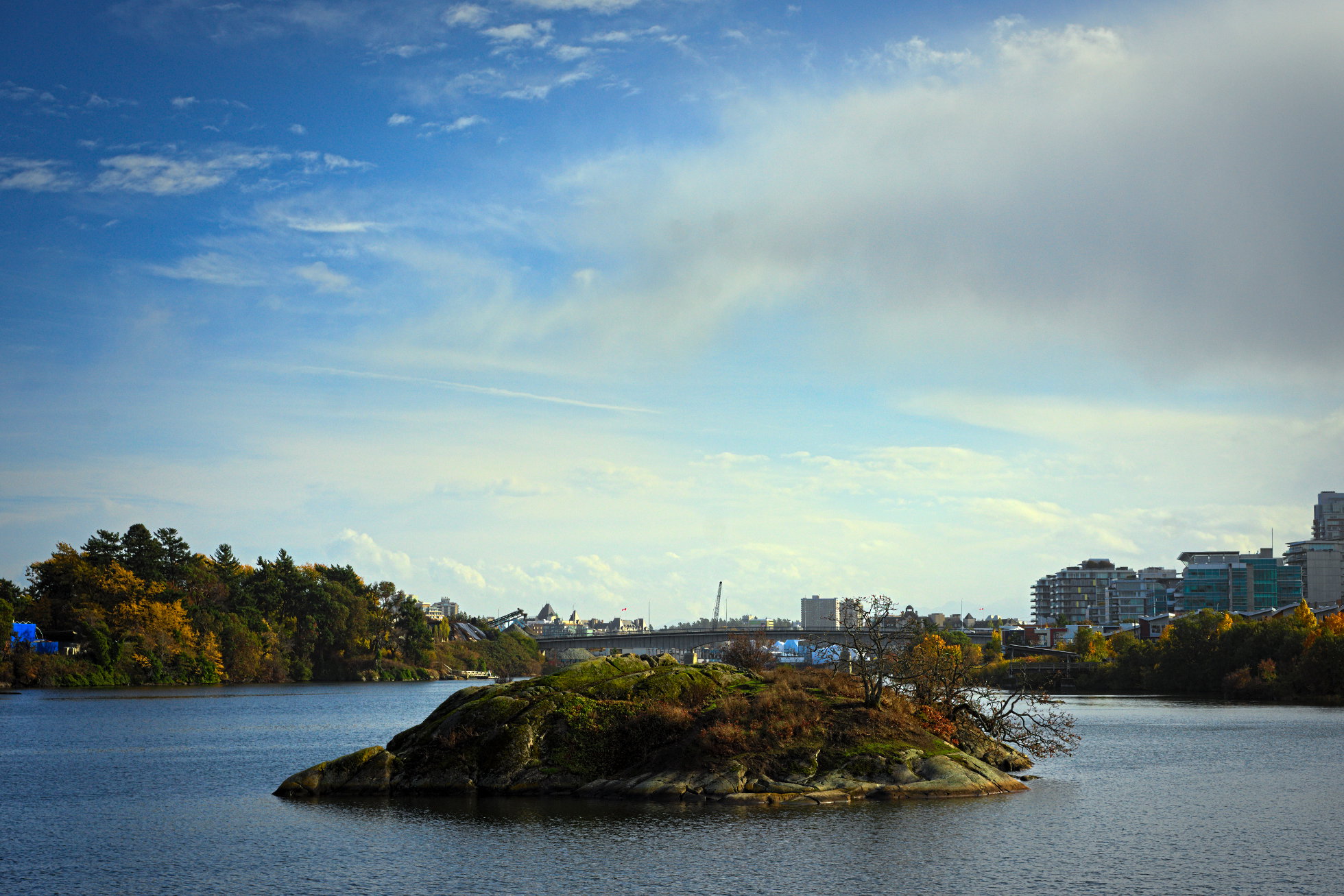
The Gorge is a splendid feature of Victoria and is well used by residents who like to be on the water. This is a fairly typical scene in the late afternoon as rowers and boaters head for home under some very photogenic clouds. This photo was taken from Selkirk Trestle, looking towards the city. The island on the left, Halkett Island, was featured in an earlier post.
Labels:
Gorge,
Halkett Island,
Selkirk Trestle,
Selkirk Waters
Sunday, March 29, 2009
Halkett Island
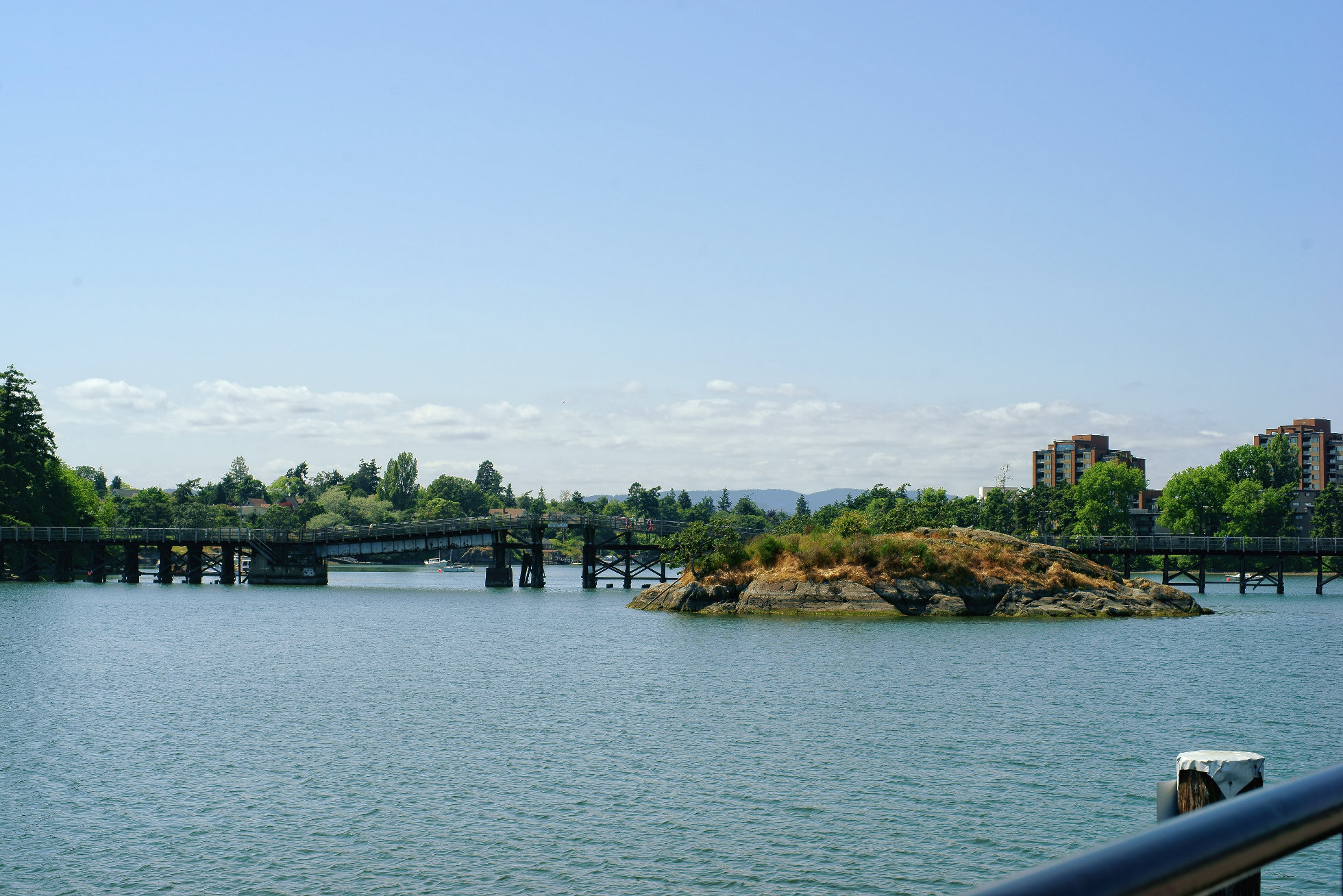
This small rocky island lies in the middle of the Gorge just east of the Selkirk Trestle (to the right in the photo). It was originally a burial island and marked the boundary between two family groups of the Lekwungen, now known as the Songhees and the Esquimalt First Nations.
In 1850, the "Island of the Dead" contained subsurface burials, but was mostly covered with small sheds, burial boxes and canoes containing human remains. The deceased were often placed in a fetal position and wrapped in a cedar bark mat. Adults were placed in a European-made, metal trimmed trunk and children were often placed in wooden cracker boxes.
Life sized carved wooden memorial figures representing prominent individuals were a common feature of burial locations.
The Lekwungen people, from the old Songhees reserve across the water, came to the island at twilight for feeding of the dead ceremonies. Sticks with chunks of sap were thrown into a fire to keep it blazing until midnight. Ritual words and chanting proceeded, as food to feed the dead was thrown into the fire.
Burials were no longer placed here after 1867, when a fire set by three Victoria boys got out of control and burned off the island. The boys' parents were heavily fined under the Indian Graves Protection Act. The island was taken away from the Songhees in 1924 by a Federal Indian Reserve Commission, but was restored to them by court order in 1993.
Joseph Pemberton, Victoria's most prolific early map maker, gave the name Halkett to the island in 1851. The Halketts were a well known, prominent British Navy family at the time.
(From a plaque placed on the shoreline near Halkett Island by the City of Victoria)
Labels:
Gorge,
Halkett Island,
Selkirk Trestle,
Songhees First Nation
Subscribe to:
Posts (Atom)