

Custom Search
Showing posts with label diving ducks. Show all posts
Showing posts with label diving ducks. Show all posts
Friday, February 26, 2016
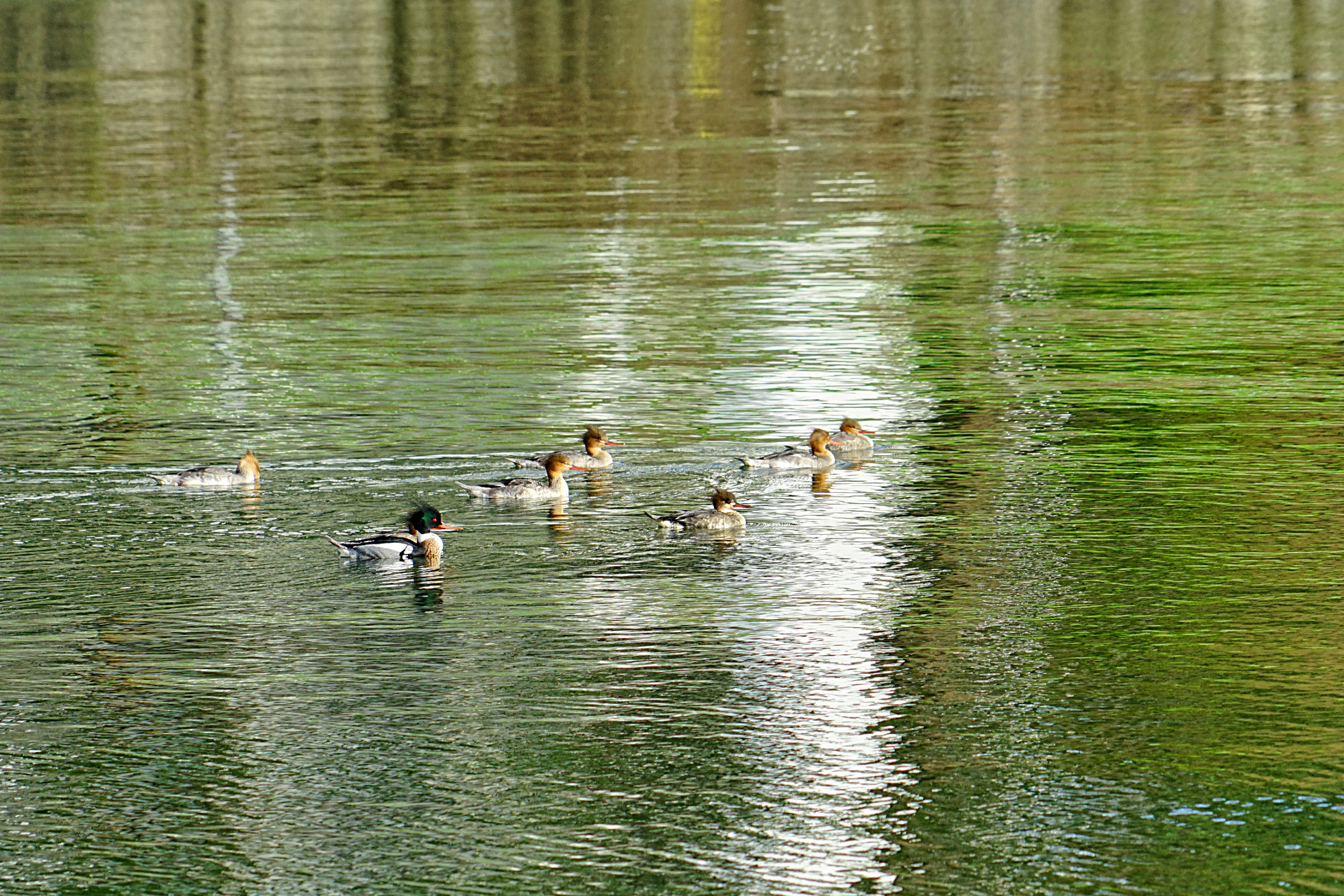
Red-Breasted Merganser


Saturday, December 5, 2015
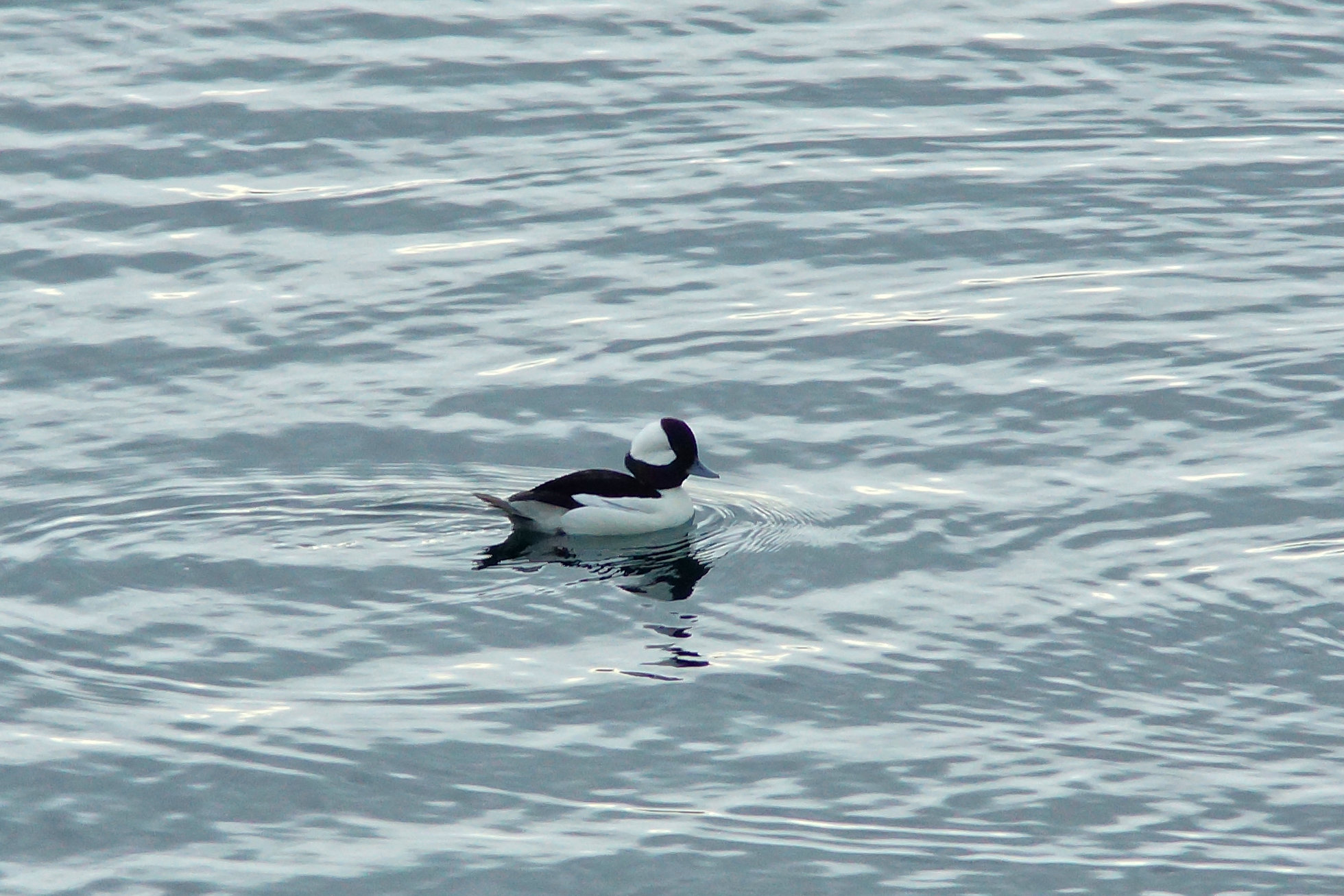
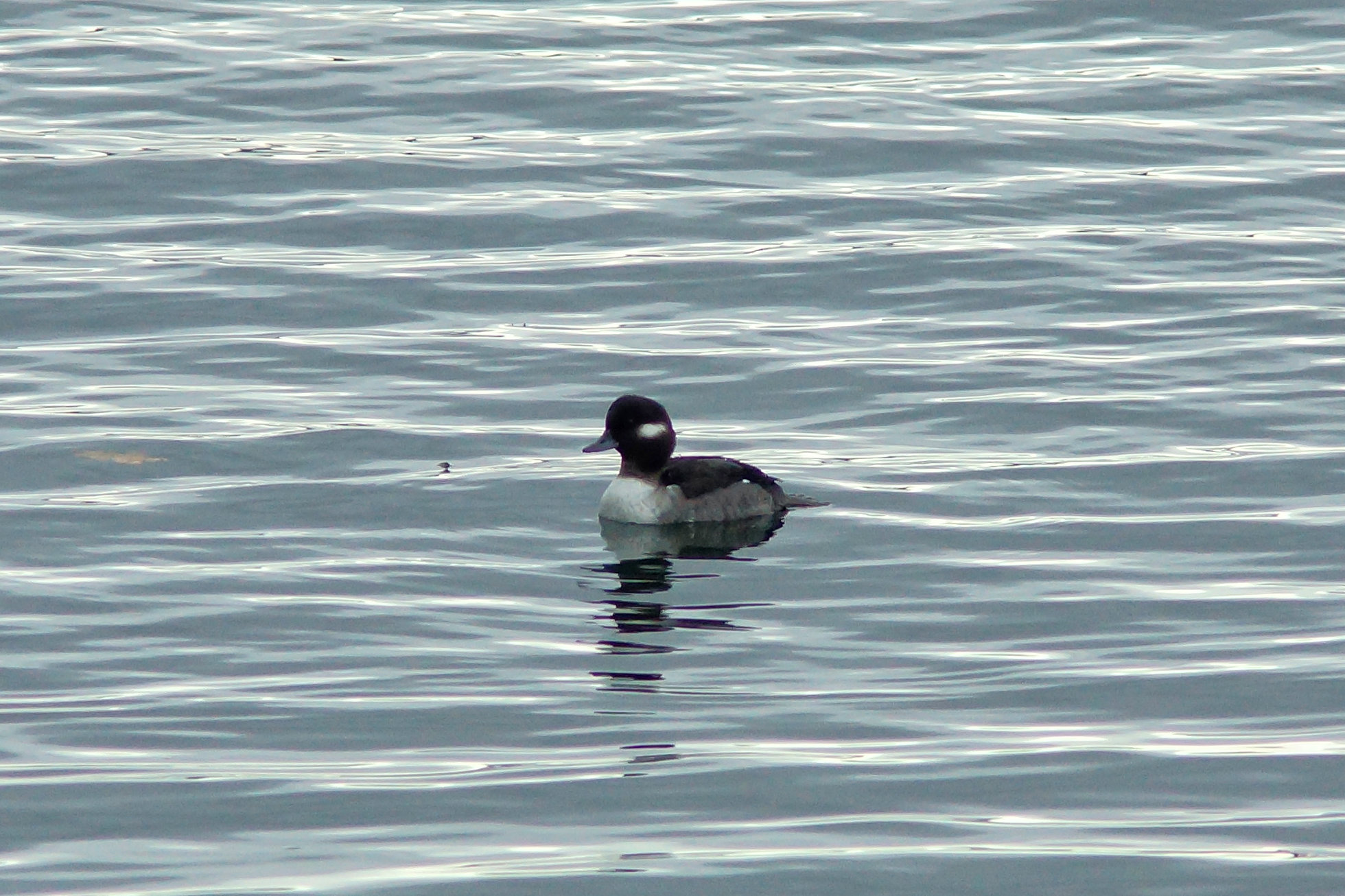
Bufflehead Ducks (Bucephala albeola)
Saturday, November 22, 2014
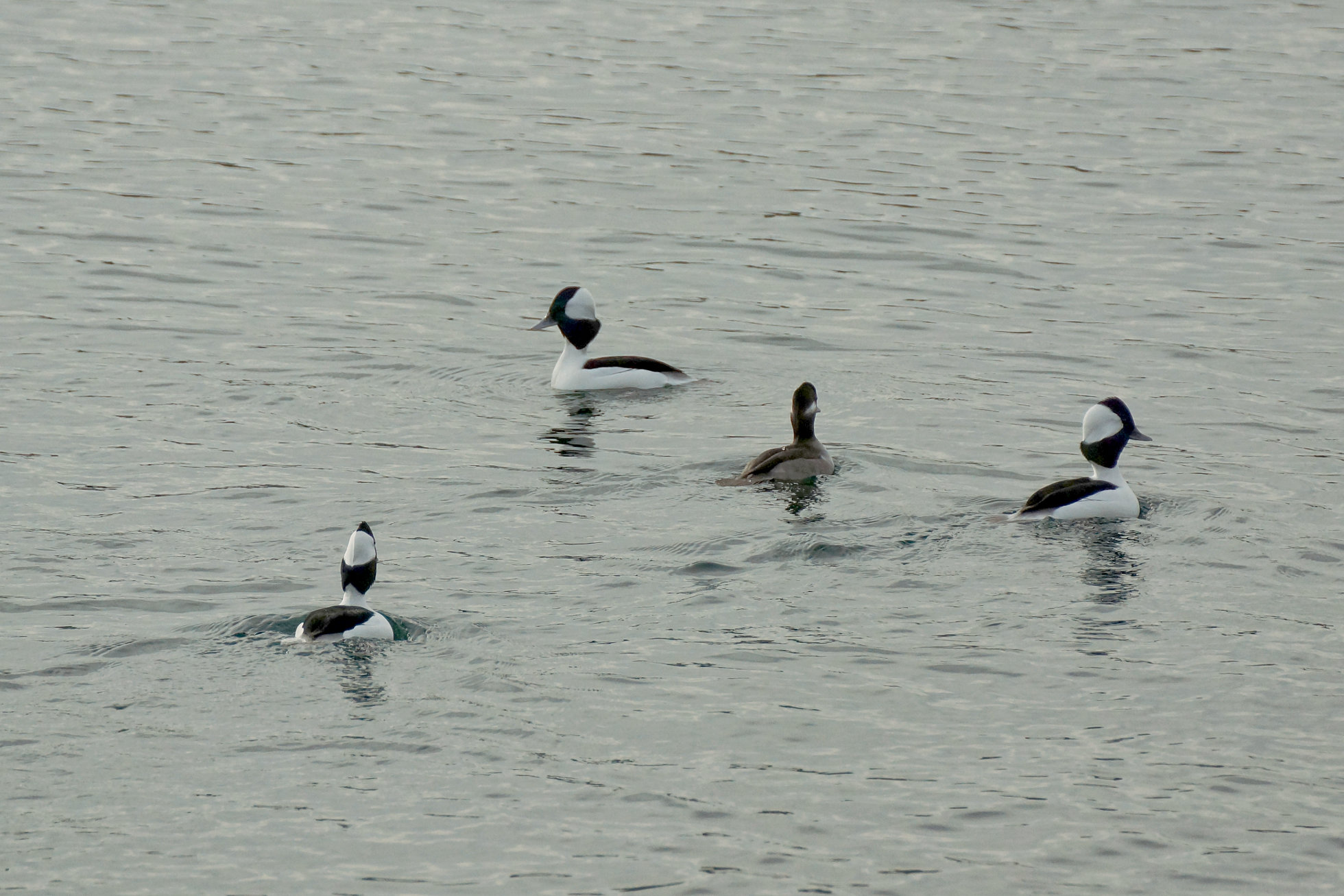
Winter Visitors 2
Tuesday, January 7, 2014
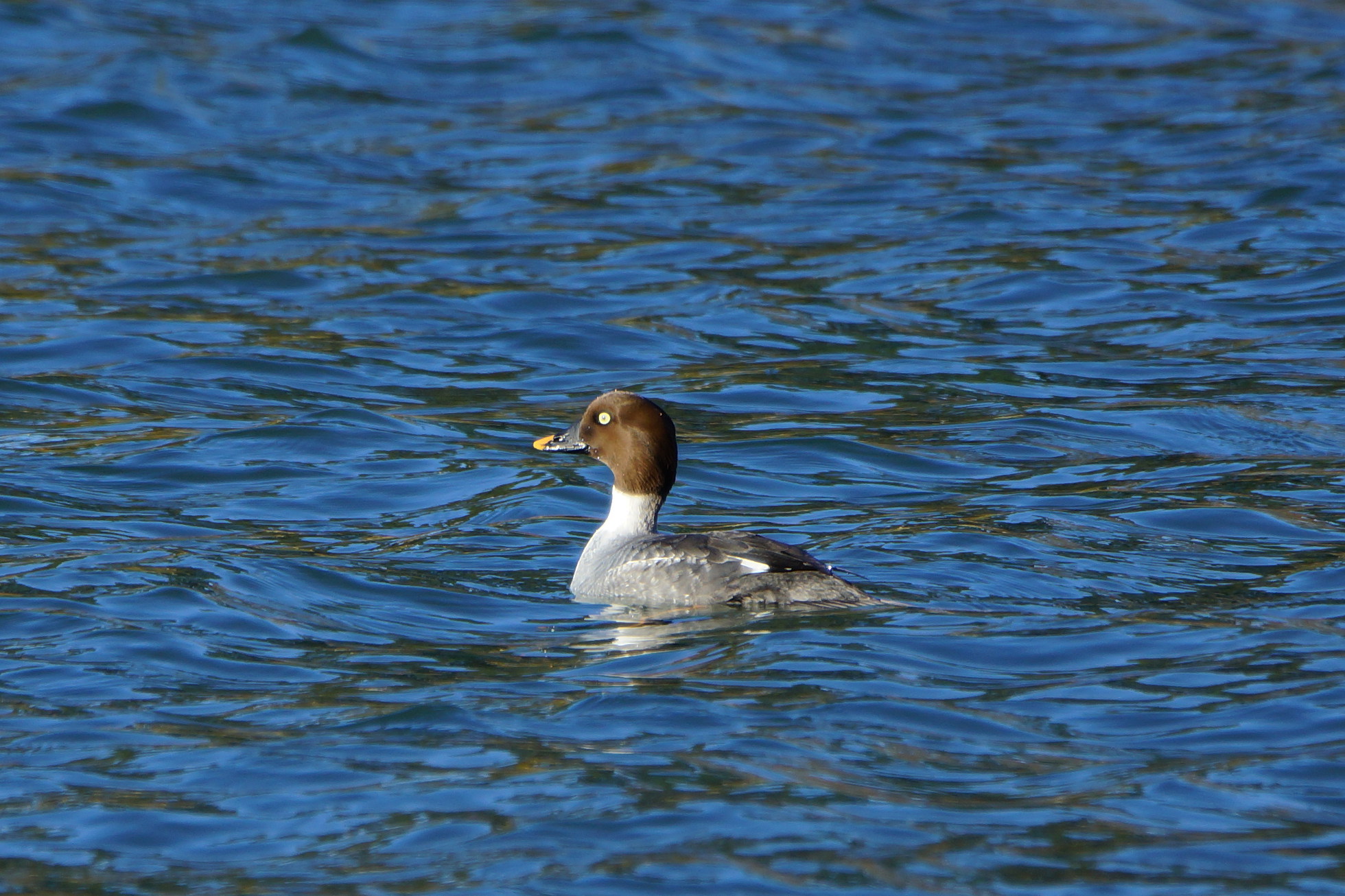
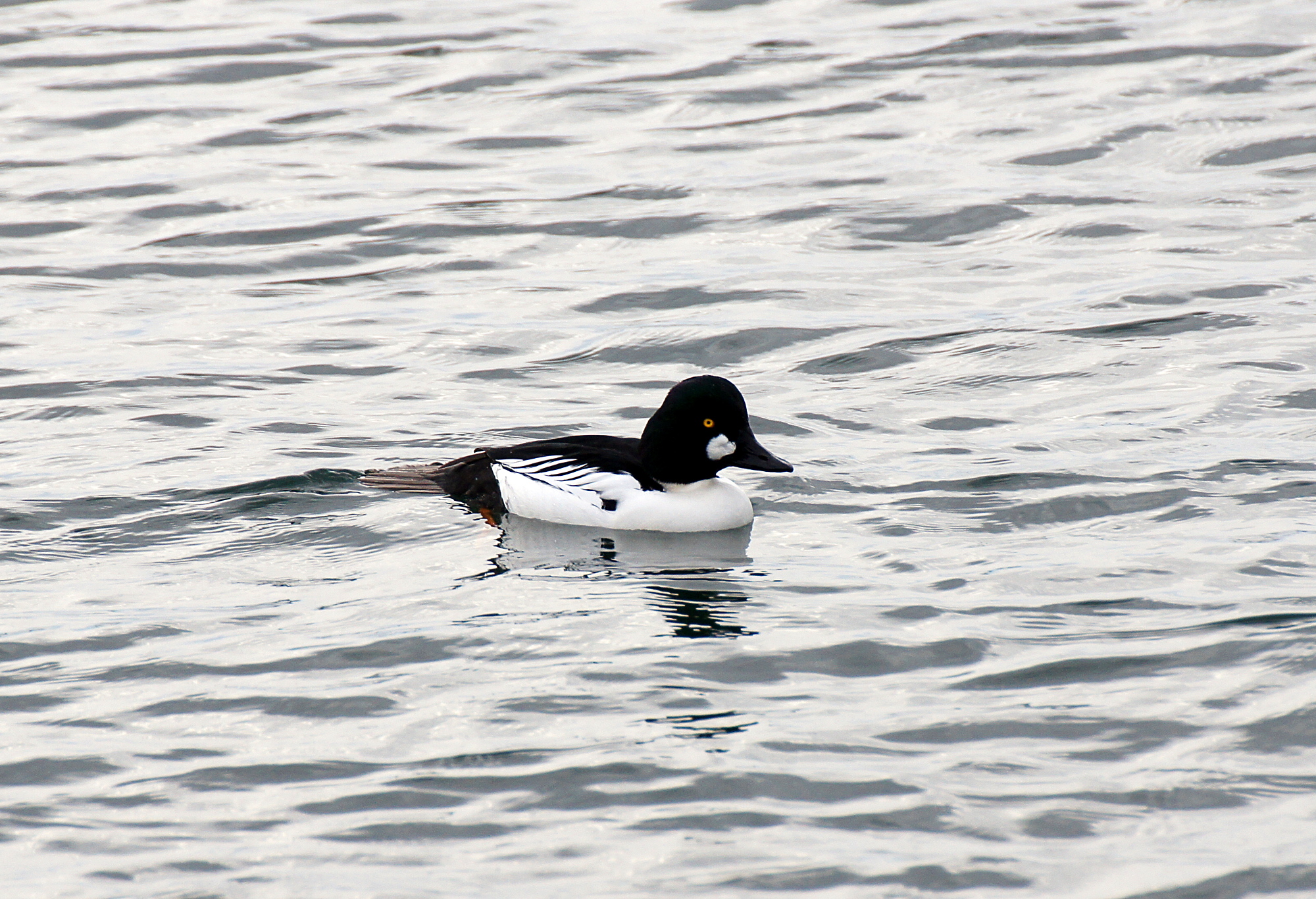
Common Goldeneye (Bucephala clangula)
Thursday, October 10, 2013
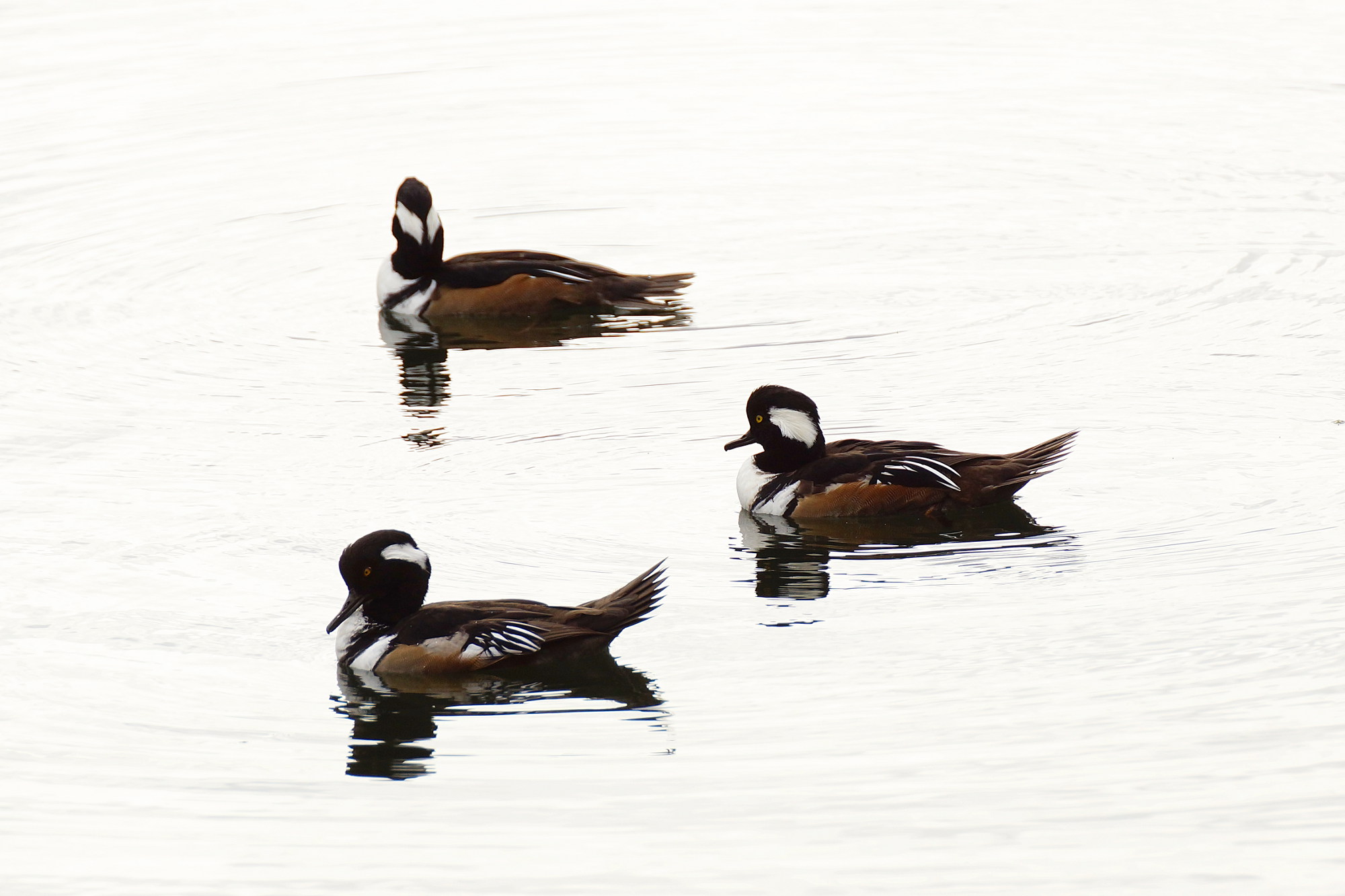
Hooded Mergansers (Lophodytes cucullatus)
Monday, February 1, 2010
Lesser Scaup (Aythya affinis)
 Beacon Hill Park's lake is a favored spot for ducks at any time of year so I thought I might find something interesting there. While the vast majority are Mallards or Wigeons, after watching for a while I noticed the duck above. This is one of two related species, the Lesser or the Greater Scaup. The major difference is size and the shape of the head. For those reasons I lean towards identifying this as a Lesser Scaup (Aythya affinis). It's called a scaup because it makes a noise like "scaup." The Lesser Scaup is a member of the diving duck (Aythyinae) family. Below are a series of photos showing a dive sequence. Had there been a fourth photo it would only have showed the ripples on the surface since when these ducks dive, they swim around underwater. Dabbling ducks such as Mallards, on the other hand, just tip themselves perpendicularly in the water, leaving their bottoms above the surface.
 |  |  |

Subscribe to:
Posts (Atom)
