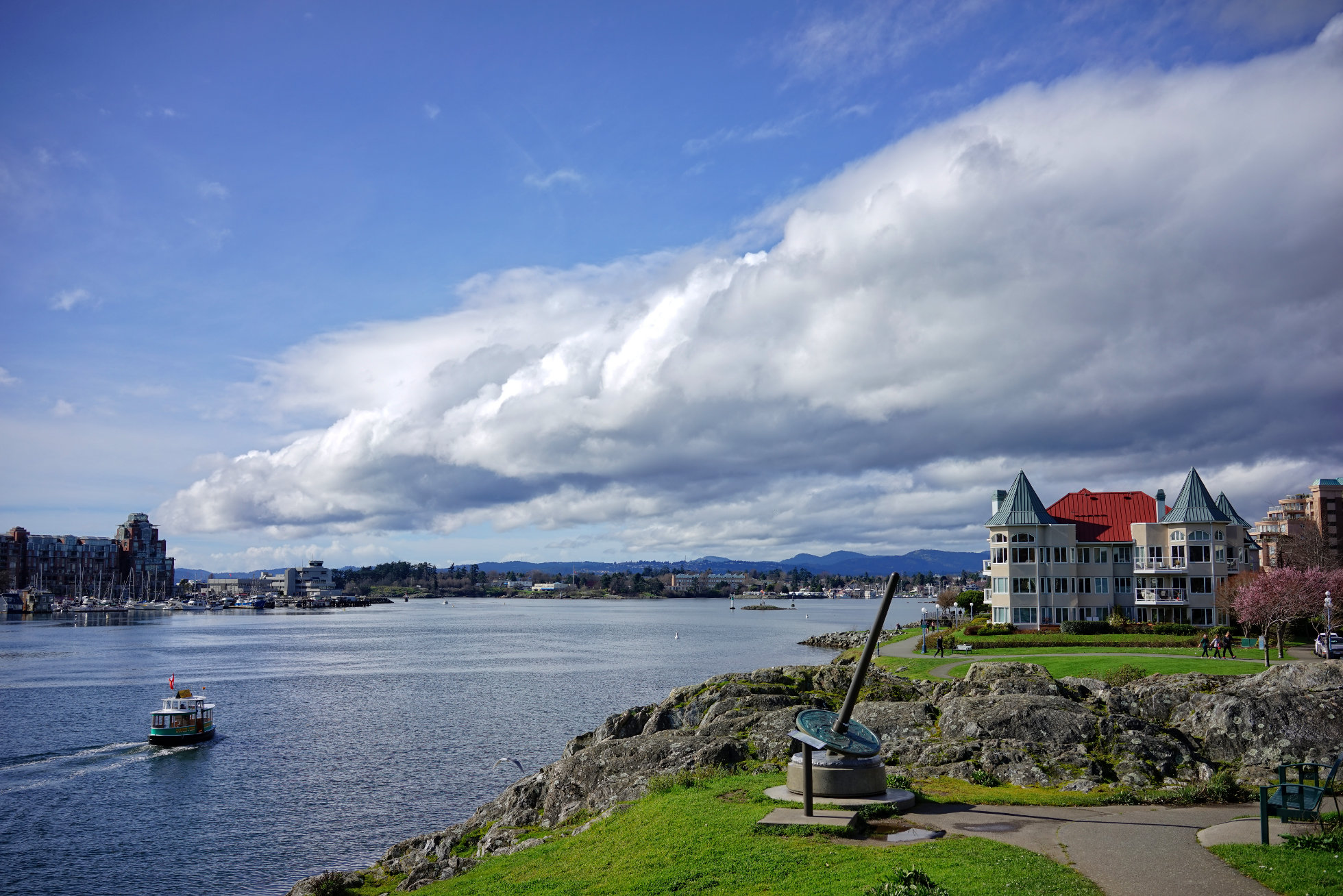
This unusual object is one of seven placed around Victoria's Inner Harbour marking places of cultural significance to the Lekwungen (Songhees Nation). The carvings by Songhees artist, Butch Dick, are enlargements of a spindle whorl, a small disk traditionally used for spinning wool. The marker above is located at Songhees Point near the beginning of the Westsong Walkway, on a small headland called PAH-lu-tsuss, which means "cradle-board."
Traditionally, once infants had learned to walk, their cradles were placed at this sacred headland because of the spiritual power of the water here. More recently, there was a settlement here, and subsequently an Indian reserve, that traded with the fort on the opposite shore. This place is also known as Songhees Point.
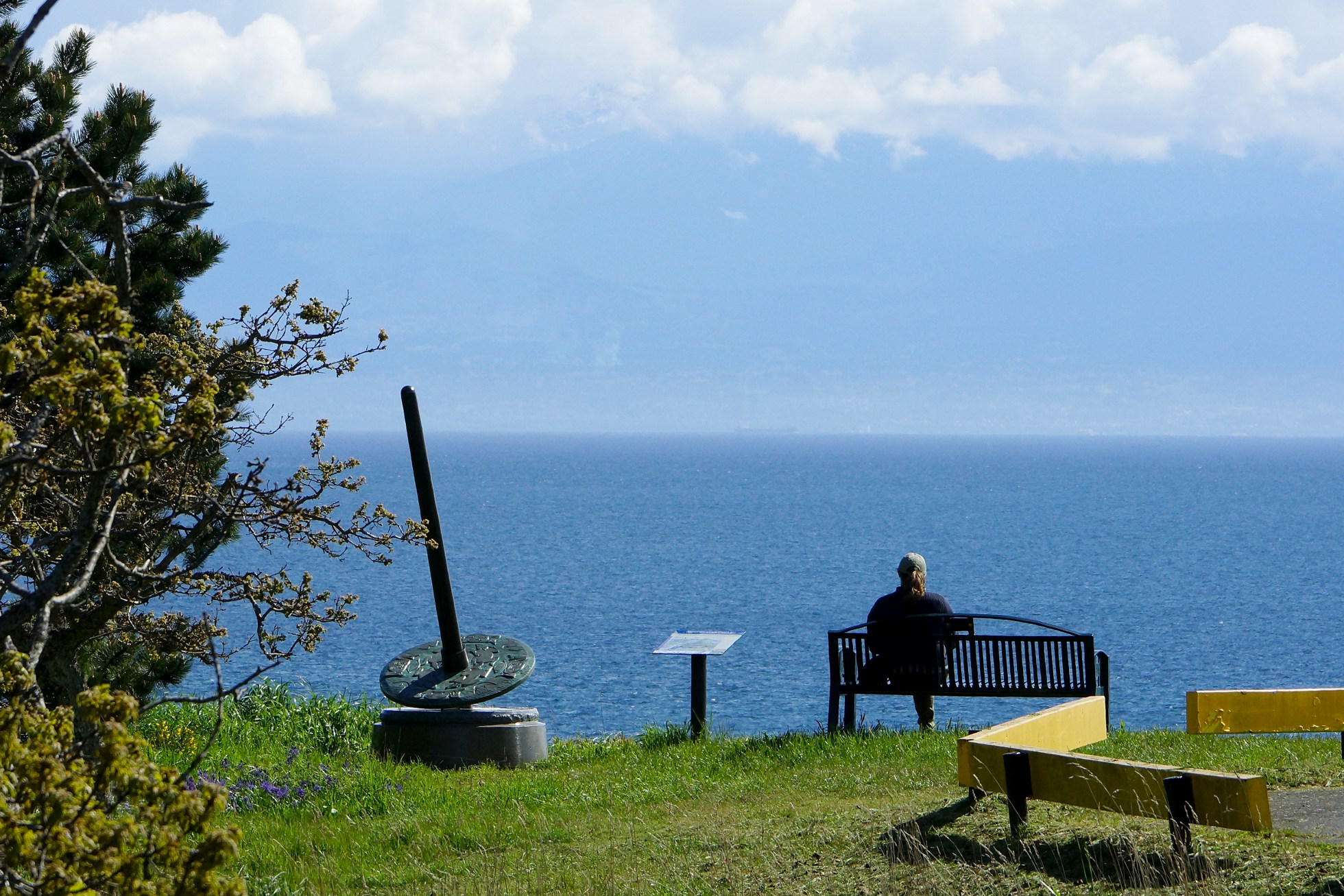
Below left is a close-up of the marker. In the photo below right we can see another spindle whorl on the opposite shore of the Inner Harbour at Laurel Point. It marks a First Nations burial ground in use until 1850.
The quote above and additional information about these markers can be found by clicking
"Signs of Lekwungen." More information about Victoria's early days and relations between the Native Peoples and the European settlers may be found by clicking
HERE.