

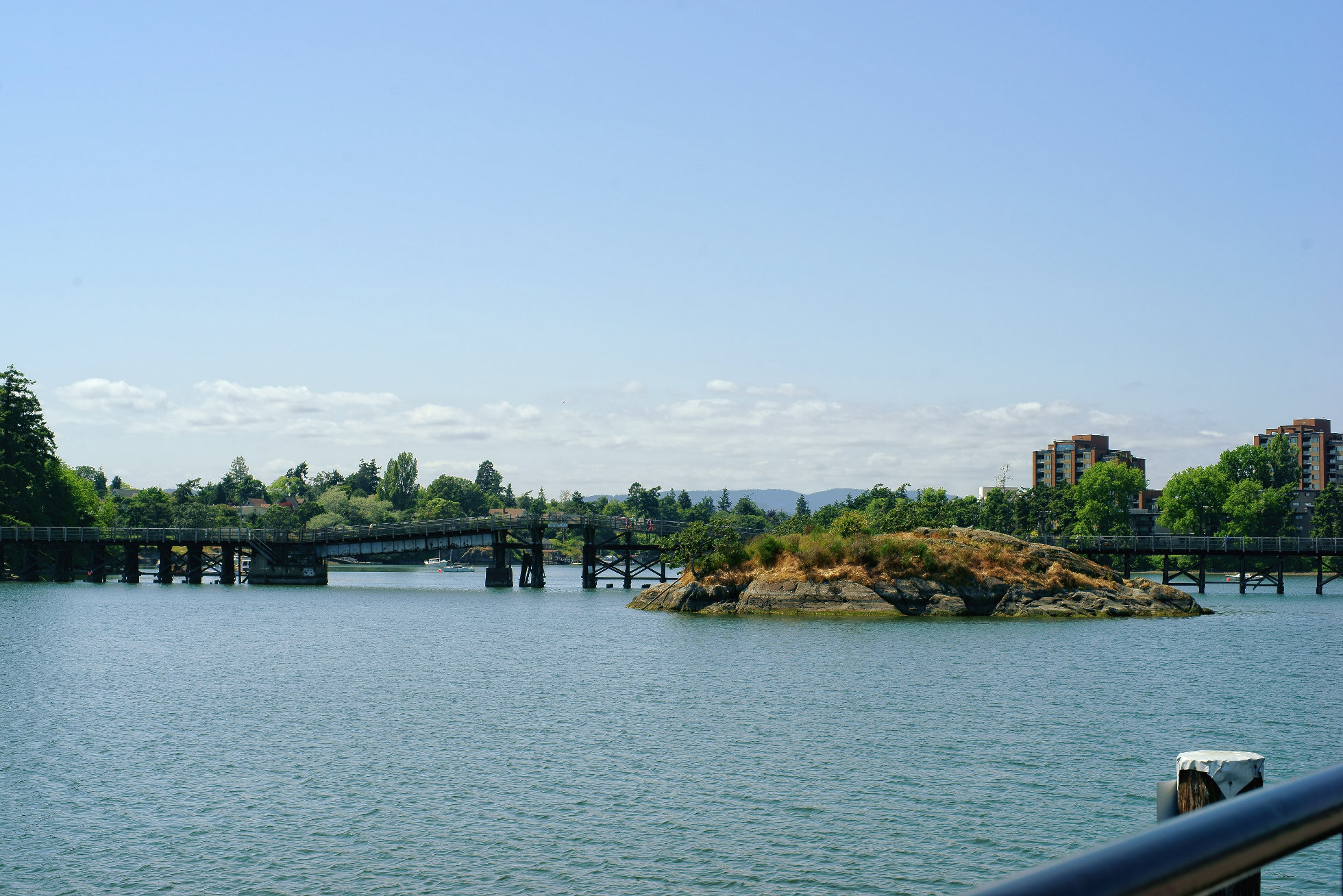
In 1850, the "Island of the Dead" contained subsurface burials, but was mostly covered with small sheds, burial boxes and canoes containing human remains. The deceased were often placed in a fetal position and wrapped in a cedar bark mat. Adults were placed in a European-made, metal trimmed trunk and children were often placed in wooden cracker boxes.
Life sized carved wooden memorial figures representing prominent individuals were a common feature of burial locations.
The Lekwungen people, from the old Songhees reserve across the water, came to the island at twilight for feeding of the dead ceremonies. Sticks with chunks of sap were thrown into a fire to keep it blazing until midnight. Ritual words and chanting proceeded, as food to feed the dead was thrown into the fire.
Burials were no longer placed here after 1867, when a fire set by three Victoria boys got out of control and burned off the island. The boys' parents were heavily fined under the Indian Graves Protection Act. The island was taken away from the Songhees in 1924 by a Federal Indian Reserve Commission, but was restored to them by court order in 1993.
Joseph Pemberton, Victoria's most prolific early map maker, gave the name Halkett to the island in 1851. The Halketts were a well known, prominent British Navy family at the time.
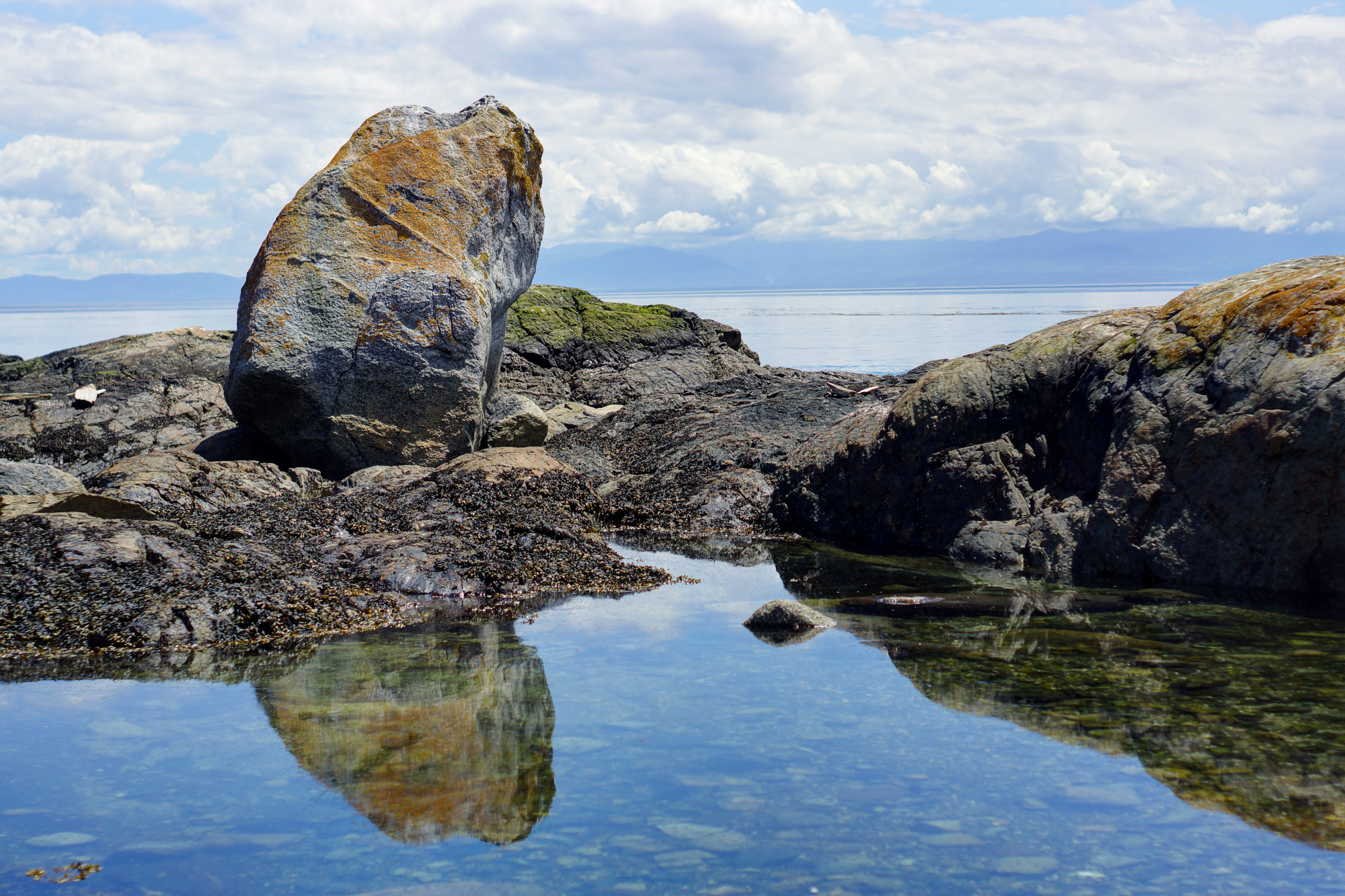
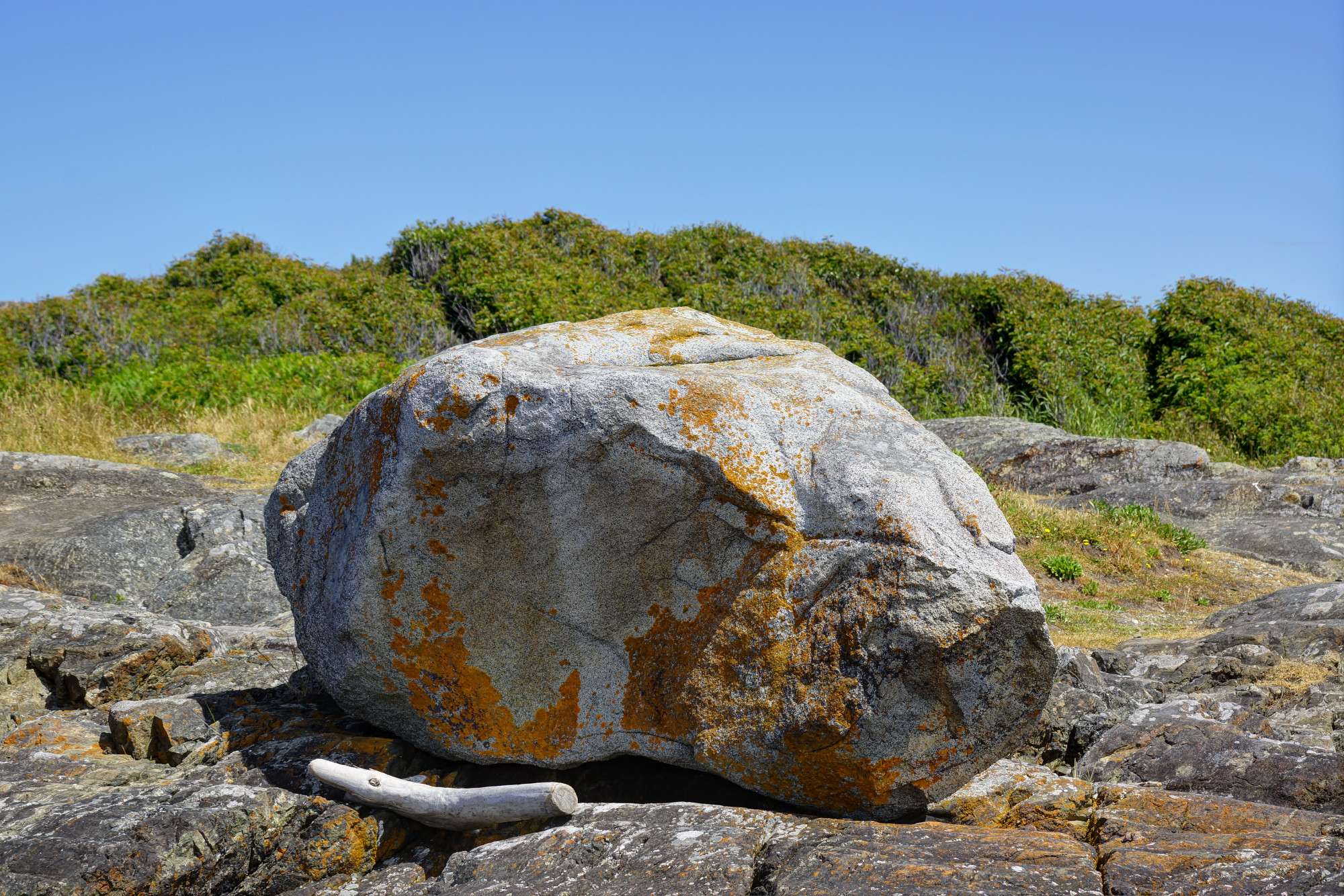 | On last week's post about Gonzales Beach I pictured one of the glacial erratics that is on that beach. Here are two more. Both of these are located at Harling Point, which marks one end of Foul Bay (Gonzales Beach). Harling Point is also the site of the Chinese Cemetery and in addition to these glacial erratics is geologically interesting because it lies directly over the intersection of two giant tectonic plates. The erratic pictured above has a name, Harpoon Rock, derived from an old Lekwungen folk tale. A man was hunting seals here when he was visited by "the Transformer" who turned him into this stone. |
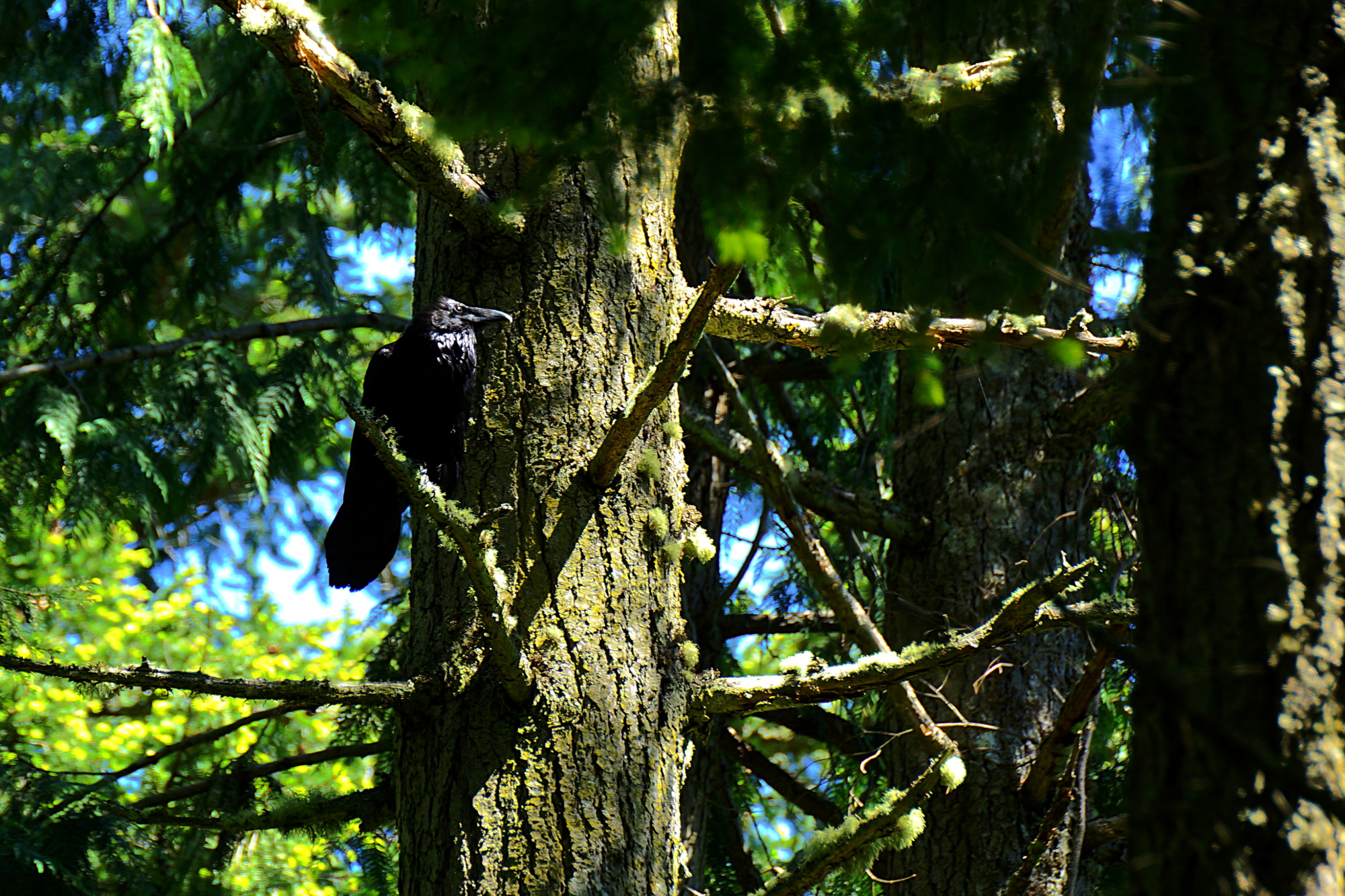
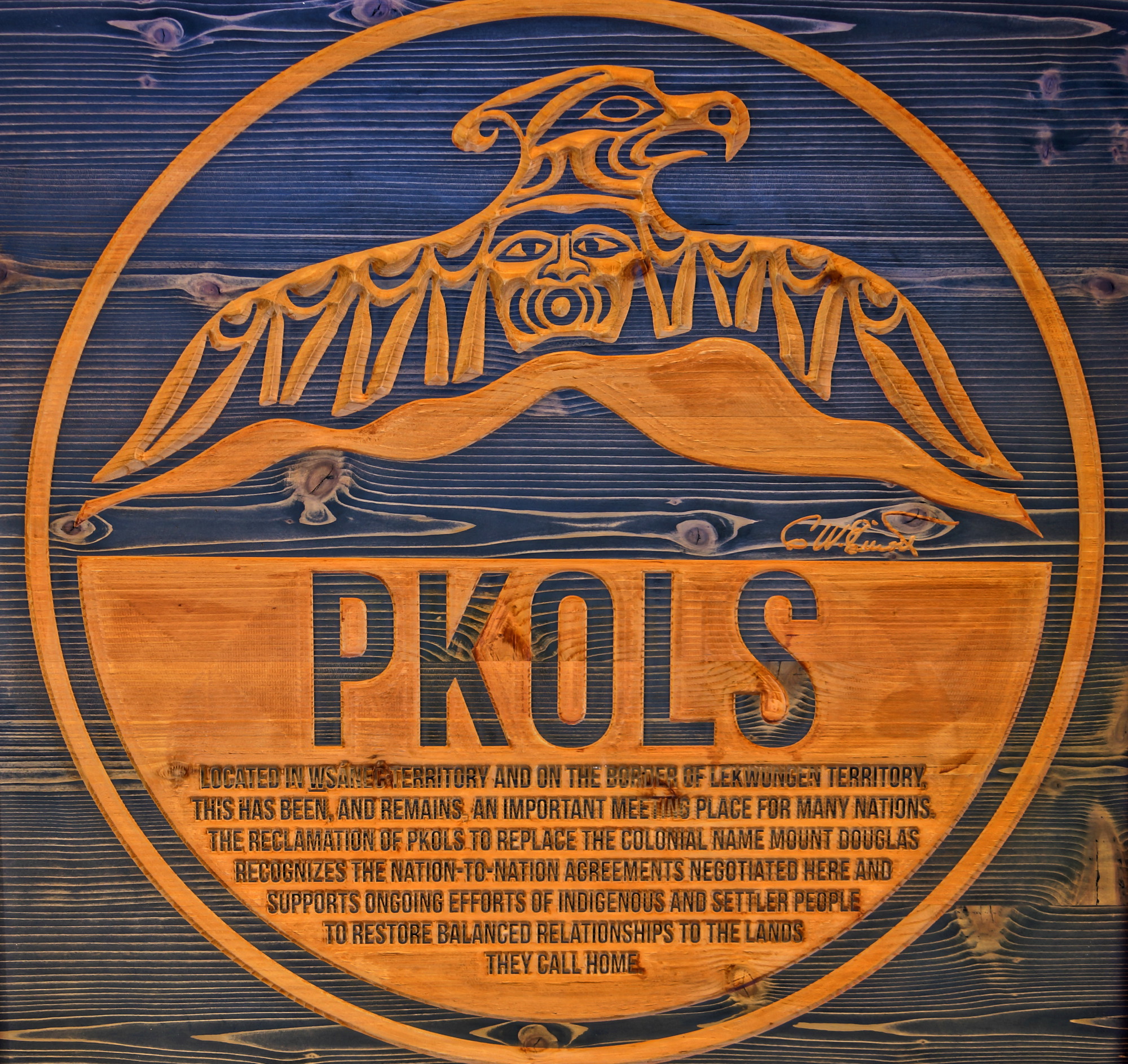 | Above is a local bird, the Common Raven (Corvus corax), that I have not featured here before, mostly because they only hang out in fairly dense forest and because they seem shy and wary of mankind. I have often heard their remarkable deep croaks and calls when I have been out in the wilds but generally they move when I try to locate them. Thus I was particularly happy when I was able to locate the raven pictured above and that he stayed in one spot long enough for me to grab a few quick photos. Raven is a very important animal in the mythology of local First Nations people so it seems fitting that my first meeting with Raven should be on the same day that I learned the traditional name for the area where I saw him. Mount Douglas Park is now to be known as PKOLS, the name given to it by the people living here before the arrival of European colonists. The new wooden plaque atop the mountain reads:LOCATED IN WSANEC TERRITORY AND ON THE BORDER OF LEKWUNGEN TERRITORY, THIS HAS BEEN, AND REMAINS, AN IMPORTANT MEETING PLACE FOR MANY NATIONS. THE RECLAMATION OF PKOLS TO REPLACE THE COLONIAL NAME MOUNT DOUGLAS RECOGNIZES THE NATION-TO-NATION AGREEMENTS NEGOTIATED HERE AND SUPPORTS ONGOING EFFORTS OF INDIGENOUS AND SETTLER PEOPLE TO RESTORE BALANCED RELATIONSHIPS TO THE LANDS THEY CALL HOME.I am sure that Raven approves. |

Traditionally, once infants had learned to walk, their cradles were placed at this sacred headland because of the spiritual power of the water here. More recently, there was a settlement here, and subsequently an Indian reserve, that traded with the fort on the opposite shore. This place is also known as Songhees Point.Below left is a close-up of the marker. In the photo below right we can see another spindle whorl on the opposite shore of the Inner Harbour at Laurel Point. It marks a First Nations burial ground in use until 1850.
 |  |


