

Custom Search
Showing posts with label Suzhou Gate. Show all posts
Showing posts with label Suzhou Gate. Show all posts
Thursday, July 30, 2015
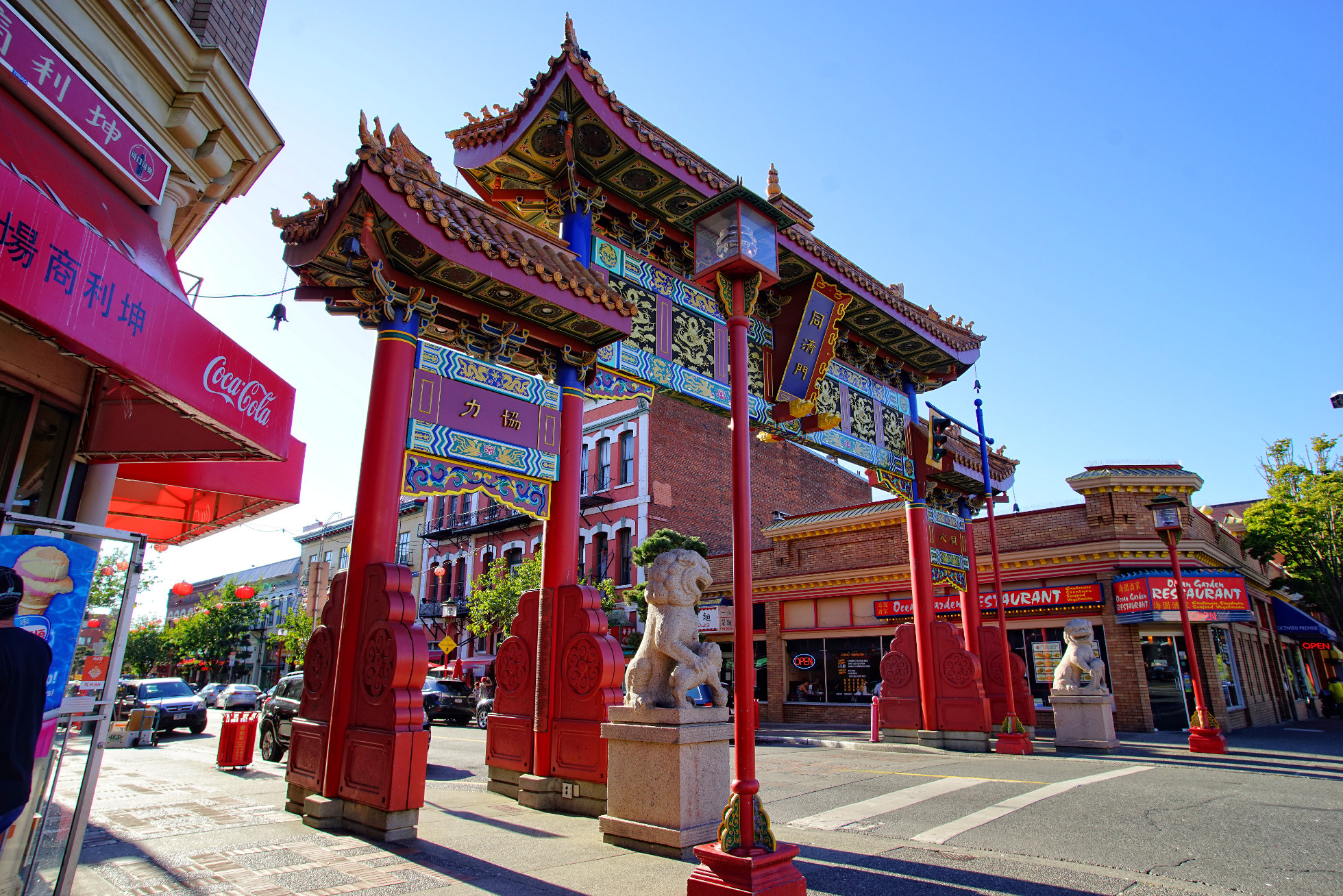
Gate of Harmonious Interest


Thursday, August 21, 2014
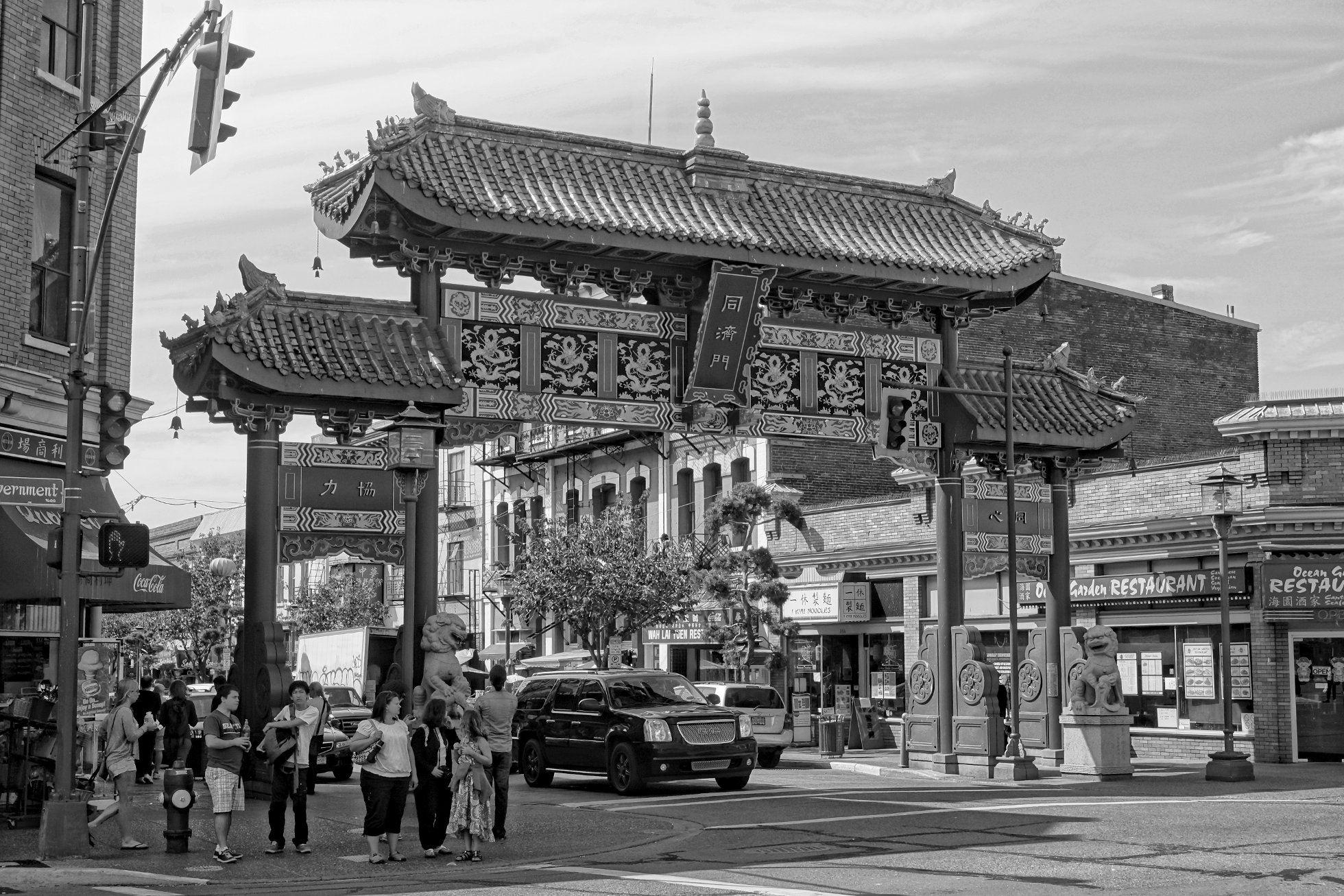
Victoria in Black and White 2 - The Suzhou Gate
Wednesday, March 17, 2010
Processing
 I took the photos above and below to provide examples of the kinds of image that can be taken with the old legacy lenses I was describing yesterday. Both these photos were taken in near darkness yesterday on my way home from downtown and were taken with a fully manual 55mm f1.8 Super-Takumar lens. They were hand held so are not as sharp as they could be but I find the colors, contrast and detail are very appealing. This lens cost me $6.95
Software I use to process images
For me what comes out of the camera is the raw material. Of course, before I click the shutter I try to frame the best image I can. Sometimes the resulting image may not need much work but generally, after I select an image that I like, I will work on it to bring out more of what I like about it, to focus it and remove irrelevant details. Mostly I am more interested in producing a memorable, appealing, striking image rather than attempting to capture reality.
When we visit the seashore, it's a multi-dimensional experience with powerful smells - seaweed and salt water, powerful sensations - warm sunlight and sea breezes, sounds such as the wind, the waves splashing and gulls crying and there is constant, often rhythmic movement. It seems impossible to capture all that all with a small, two dimensional static image. With luck and a great deal of skill we may be able to capture an image that suggests all those aspects of the scene that the camera cannot record. However, I think that often we are able to invite the viewer to participate in re-creating the scene's missing dimensions in his or her own mind by intensifying the information we have been able to record. For me that usually means adjusting the contrast, saturation and focus and improving the composition (if possible) by cropping.
For the most basic adjustments I use a free, open source graphics editing program called GIMP. It will do most of what can be done with Photoshop and does it for free. What's more, many Photoshop plug-ins work with GIMP. I recommend it highly. The GIMP organization also has a registry of plug-ins and filters that can be downloaded free of charge. Great stuff! I use it extensively and whenever I have time I go through one of the many free user-created tutorials.

 | Whenever I think an image can benefit I also put it through HDR (High Dynamic Range) processing using a program called Photomatix. There is still considerable resistance to HDR processing. However, I think this resistance is mostly directed towards the more extreme manifestations of HDR that may be greatly oversaturated and cartoonish. Often HDR processed photos don't look very HDR and are not recognized as such. The prizewinning Chinatown Gate photo I posted a few days ago was processed with HDR. To the left is a split version of the photo with the HDR treated image on top and the original image below. The original image reflects a typical problem. In order to expose the darker underside of the gate properly the sky gets overexposed. Film photographers had a saying for such situations - overexpose and underdevelop. This preserved the detail that would otherwise have been lost in the shadowed parts of the photo. HDR software performs essentially the same process digitally. Our vision is incredibly sensitive. When we look at a scene, we are always focused on some part of it but our eyes flick around back and forth and as they do so the iris expands and contracts according to the light reflected from that particular part of the scene. Our mental image of the scene is thus composed of all those hundreds or thousands of differently exposed bits of the scene put together in our brains. In my opinion, HDR processing gives us an image that is closer to this composite image we create in our brains than the normal image that comes from a camera in that different parts of the scene are differently exposed, something no camera is yet able to do. New cameras, however, often have HDR processing built in to the internal software image processor. Photomatix costs about $100 but there are free HDR programs available online as well. |
 Sometimes I work with images in RAW format, especially if I need to adjust the white balance or the overall exposure. For this I use the Sony software that came with the camera. Most of the time, however, I work with the JPG versions. I almost always shoot so I get both RAW and JPG versions of each photo. The only time I just shoot JPG is when I am shooting something where there is a lot of action and I want to exploit the camera's fastest shooting mode.
Well, I do tend to run on and on but tomorrow I hope to wrap up this somewhat narcissistic excercise with a little discussion of the brutally simple rules of composition that I employ - nothing very original here but it never hurts to repeat good things.
Monday, March 15, 2010
Gate of Harmonious Interest - Reprise
This e-mail just received:
Benjamin,
Congratulations! Your photo entitled “Gate of Harmonious Interest” is the Grand Prize Winner of the Clipper Vacations photo contest. You’ve won a Clipper Vacation Trip for Two! Prize includes two free round trip tickets on the Victoria Clipper plus two nights’ accommodation, champagne breakfast aboard the Victoria Clipper, luggage handling from the hotel and a Victoria Clipper Goodie Bag.

Saturday, February 13, 2010
Year of the Tiger
Canada's oldest Chinatown has decked itself out with new red lanterns to celebrate the Chinese New Year. The lanterns in this photo are hung on the Gate of Harmonious Interest on Fisgard Street in Victoria's Chinatown. This is the Year of the Tiger.
Thursday, April 2, 2009
Of Lions and Lenses
 Lately I've been collecting old lenses for my camera (mostly because I can't afford new lenses but also because I'm still very much an experimental, neophyte photographer and don't really know what different kinds of lenses do). Anyway, I recently bought a multi-coated 105 mm f2.8 Takumar lens for $10 and, with an adapter, stuck it onto the front of my Sony DSLR. This is all manual now: focus first, then set the aperture using a ring on the lens case, then set the shutter speed. It sounds a bit much compared to today's fully automatic photography but I found that with just a little practice it's quite easy. The through the lens metering system still works and indicates when the shutter speed and aperture combination will provide the correct exposure. Well, I'm very pleased with this lens. Nice color and very sharp images. The photo above is also an example of learning from another photographer. I always liked Chuck Pefley's shot of this lion from his trip to Victoria last year. This is my attempt to emulate that shot. You can see the original version on Chuck's Seattle Daily Blog by clicking here. The lions (2) stand one on each side of the Gate of Harmonious Interest on Fisgard Street in Victoria's Chinatown.

 IF you're interested in lenses, read on: The lens mentioned above is a prime lens, meaning that although it is telephoto, it does not zoom in. If want something in the frame to be bigger you must physically move closer. Nor does it zoom out - if you want something to be smaller you must move back. I have a couple of other prime lenses: a 135 mm f3.5 and yesterday I bought a 300 mm f5.5. If it wasn't a miserable rainy day today I'd be out trying the latter since I am very excited by the sharpness of the test shots I took with it. It probably sounds like I have money to burn but I paid less than $50 total for all three of these lenses because they're old, manual and don't fit on modern cameras without adapters. I found them in thrift stores. You can buy adapters on E-bay. All three of the lenses above are M42 screw mounts so I only needed one adapter ($7). Yesterday's flower photos (below) were also taken with the 105 mm lens.
Wednesday, February 11, 2009
On the Way Home


Tuesday, July 22, 2008
Quonley's

Monday, July 21, 2008
The Gate of Harmonious Interest

Sunday, March 16, 2008
Victoria's Chinatown - Fisgard Street
Victoria's Chinatown is the oldest and was for many years the largest in Canada. Vancouver's is now much larger but Victoria's Chinatown is still a thriving and busy part of the city. It's a great place to shop for Asian foods and there are many interesting shops, boutiques and, of course, restaurants. Chinese immigrants first settled in the area during the gold rush era in 1858 and soon occupied much of what is now downtown Victoria. Canadians of Chinese ethnic origin still form one of the largest non-European populations in Canada and, after English and French, Chinese is the most widely spoken language in the country.
In the center background you can see the tile roof of the glorious gate to Chinatown, donated by Victoria's sister city in China, Suzhou.
The photograph of the camelia below was taken in Market Square, one block over from Fisgard Street.


Subscribe to:
Posts (Atom)
