Custom Search
Showing posts with label Bucephala albeola. Show all posts

Saturday, December 5, 2015

Bufflehead Ducks (Bucephala albeola)

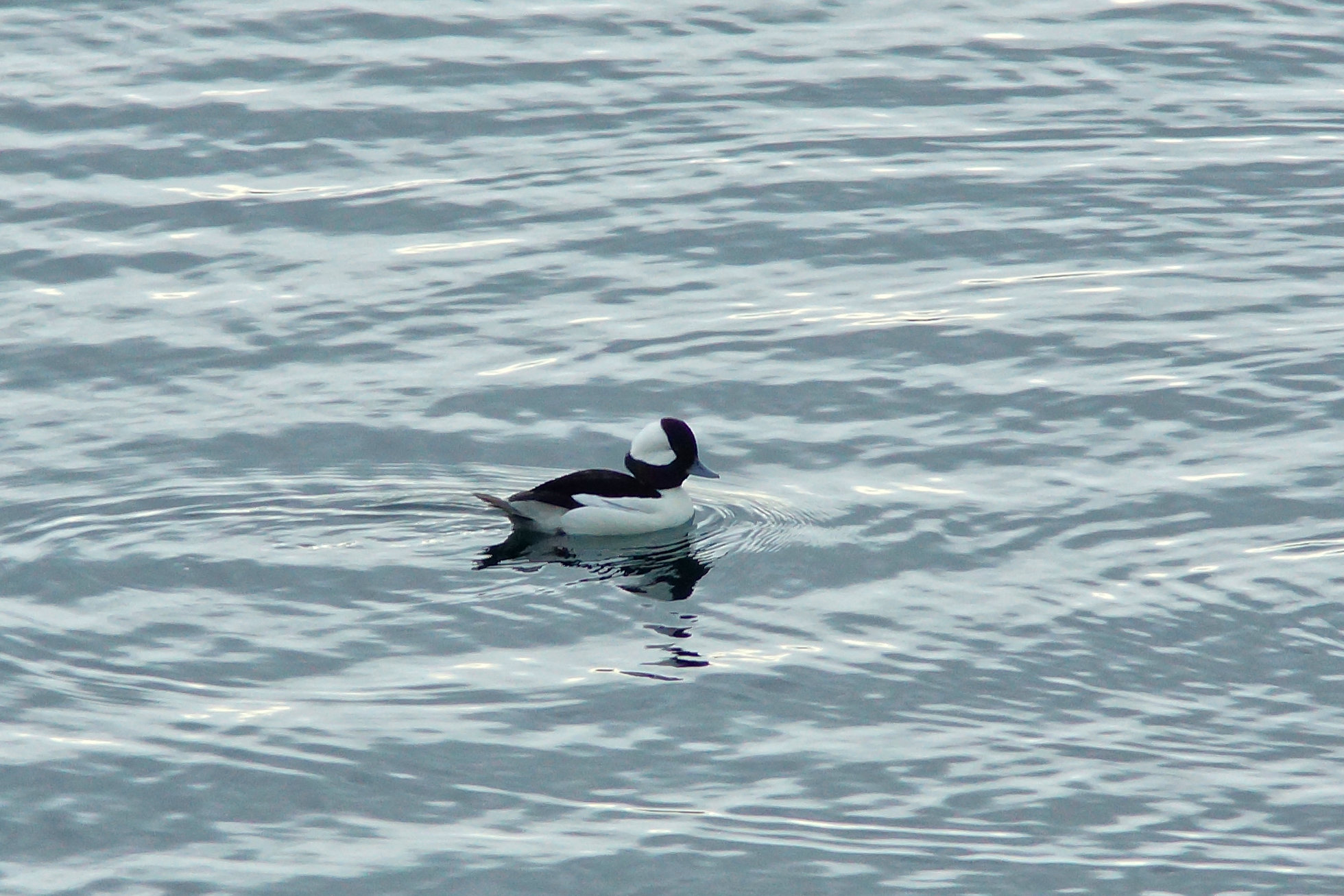
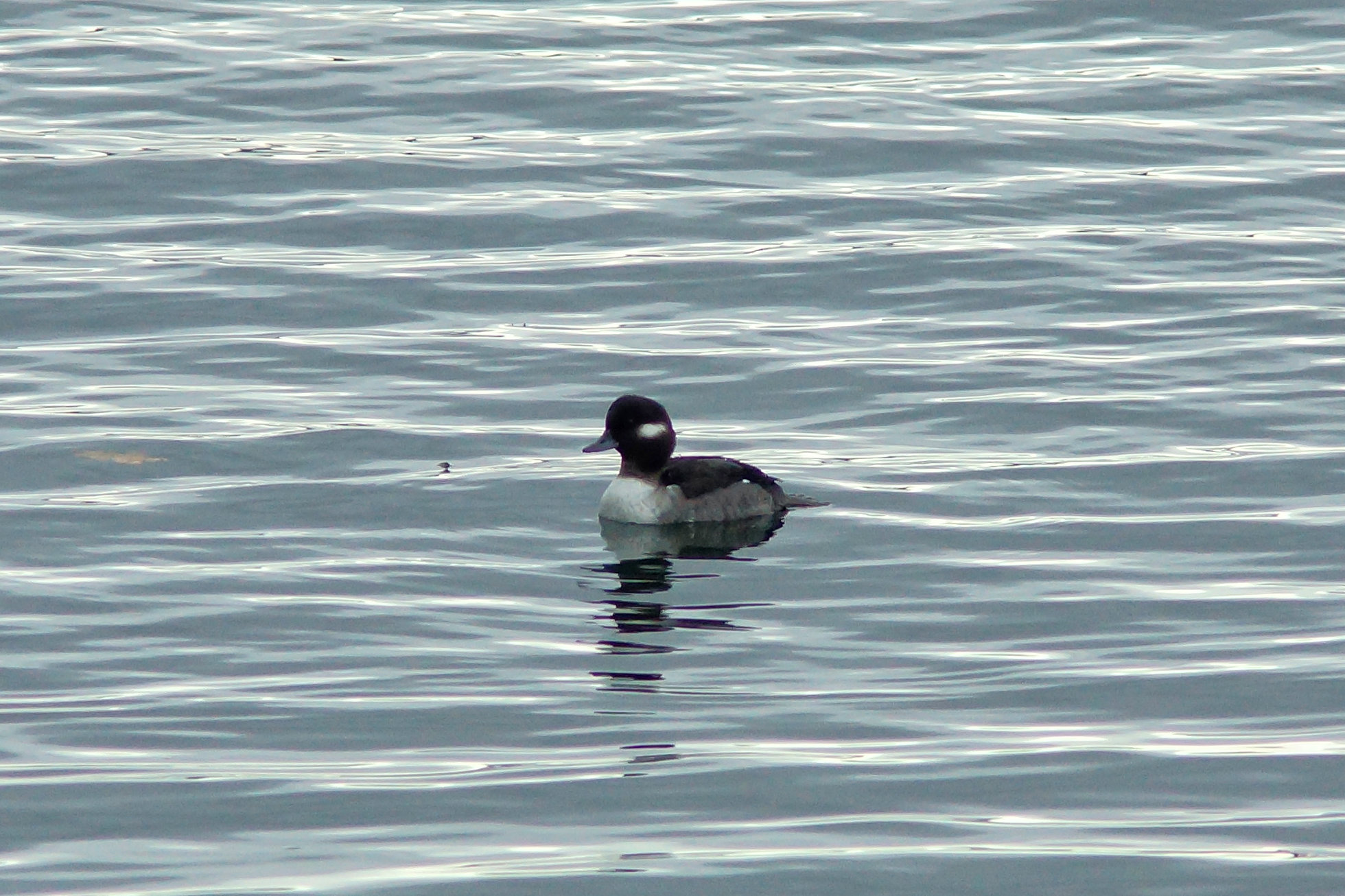
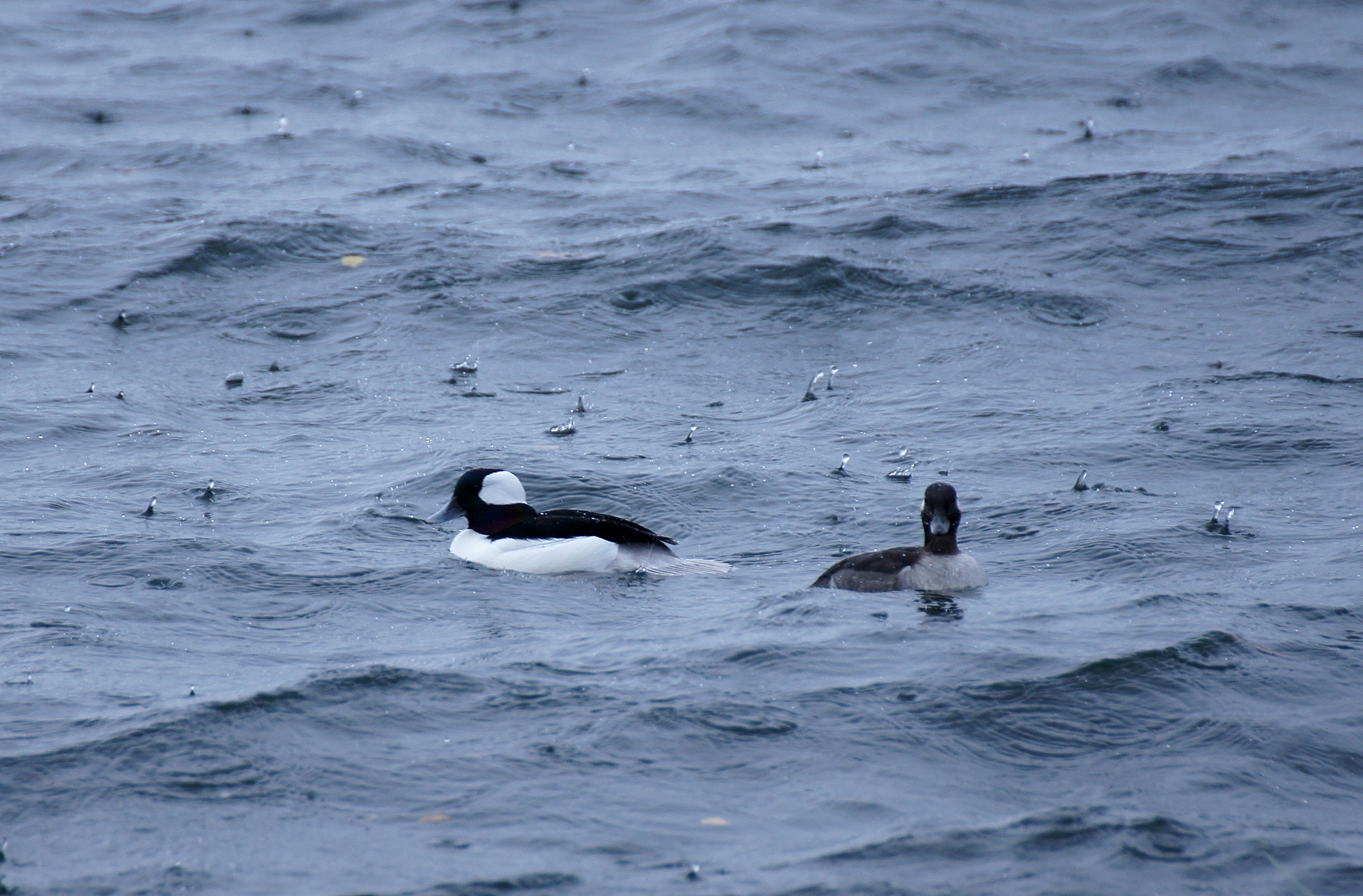
Here's a little closer look at these very small diving ducks. Above is a Bufflehead drake (Bucephala albeola) and below is the female of the species. I find it interesting how the different waterfowl and ducks in particular exploit different parts of the shoreline and different foods. Dabbling ducks like Mallards exploit the shallowest waters near the shore because they only feed on what they can reach while floating on the surface. The Buffleheads pictured today generally are shallow divers that feed on crustaceans and molluscs they find on the bottom a little further out than the dabbling ducks and in deeper water. Diving ducks like the mergansers that feed more on fish than on bottom life dive deeper and stay down longer so they are often seen even further away from the shore in deeper water.

Saturday, November 22, 2014

Winter Visitors 2

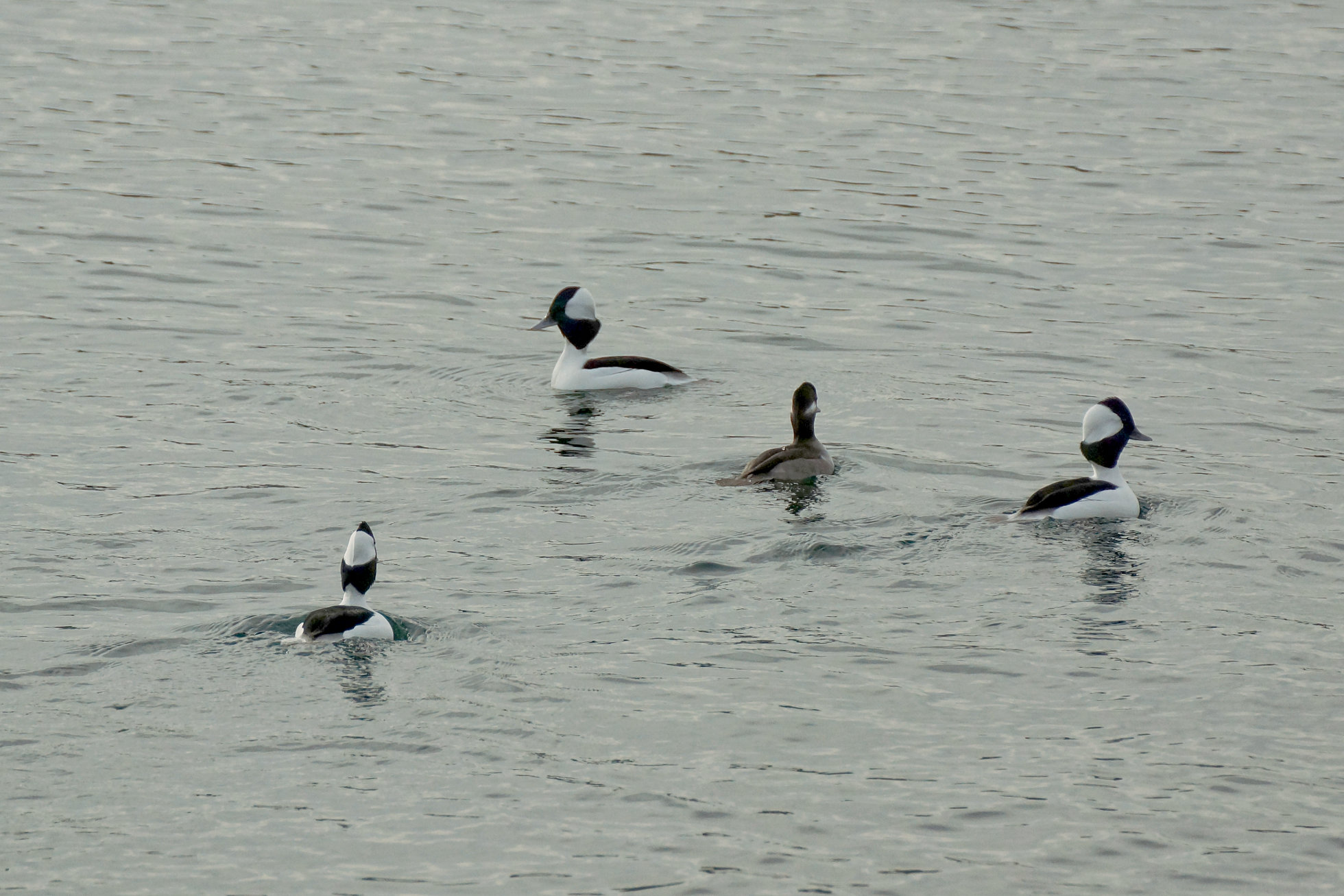
Here's more winter visitors, a trio of male Bufflehead Ducks (Bucephala albeola) competing for the attention of a female of the species. It's possible to see several hundred of these ducks in a morning's stroll along the West Bay Walkway these days.

Friday, December 13, 2013

Buffleheads (Bucephala albeola)

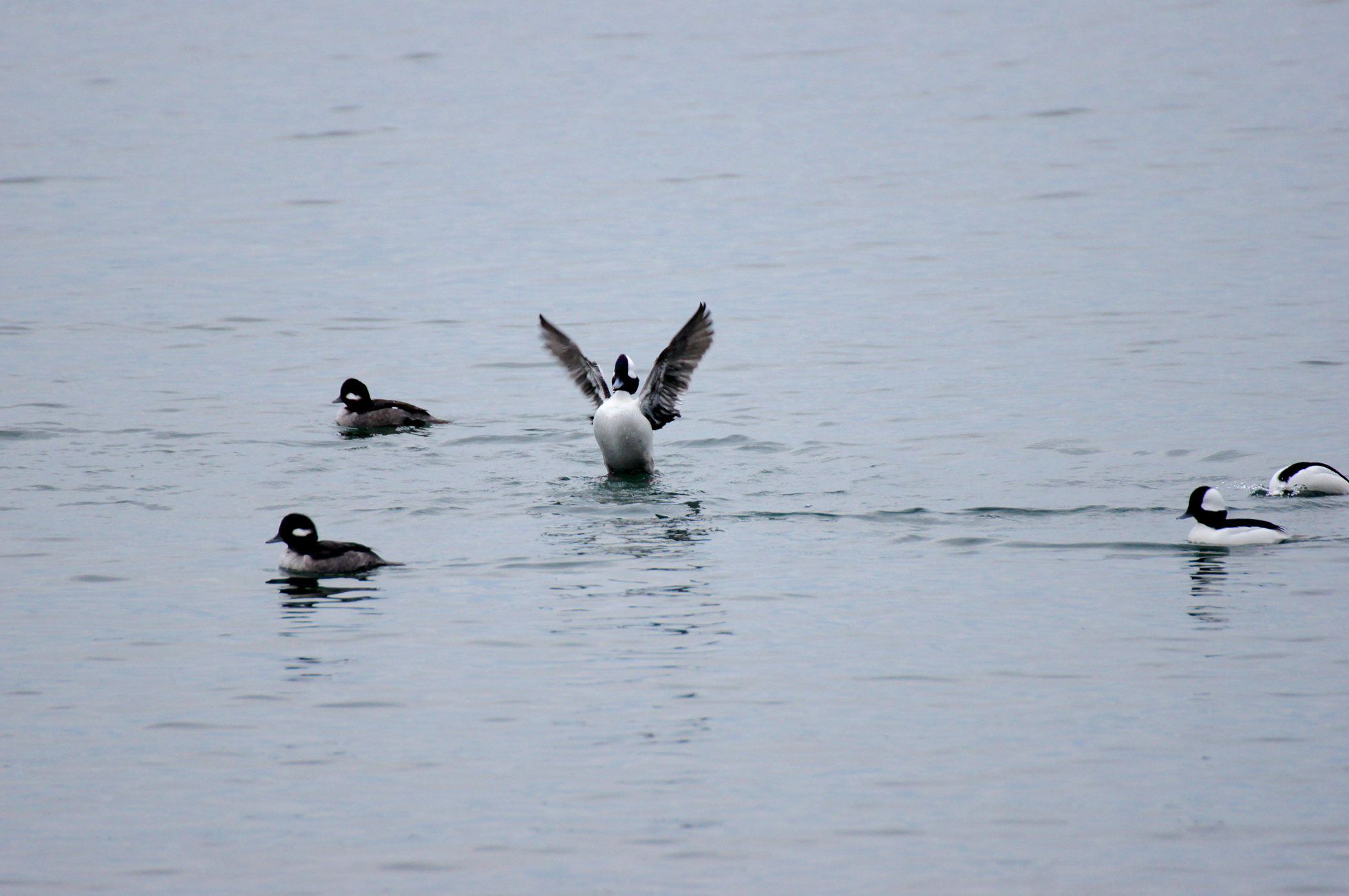
There is a large flock of Bufflehead Ducks (Bucephala albeola) wintering off the West Bay Walkway this last month or so. They are wonderfully buoyant diving ducks that have to work very hard to stay under the water and pop up like some kind of children's toy as soon as they stop striving. They have two other behaviors that I suspect are associated with mating since only the males do them. The first is what is pictured above - standing up on the surface and flapping the wings vigorously a few times. The second behavior is what I call "motorboating" since it consists of paddling very fast on the surface so as to throw up a dramatic bow wave. Both these activities are done near females.

Wednesday, December 5, 2012

Buffleheads

Here are some more winter visitors, a pair of Bufflehead Ducks (Bucephala albeola). As you can see in the photo we are having a lot of weather that is more suitable for ducks than for photographers.

Friday, November 11, 2011

Bufflehead (Bucephala albeola)

Today's post brings up to date the list of newly arrived winter residents with these photos of some Bufflehead Ducks (Bucephala albeola). There are still a few more wintering birds that I have not seen yet this year - Goldeneye Ducks for one. The photo above is of a male Bufflehead. Below are a couple of males and a female. Most of these small ducks (and mergansers) are busy these days flirting and bonding. The males in the photo below are engaging in one of the flirting behaviors. They get low in the water and then chug along at high speed for a short distance, creating lots of showy turbulence to impress the coy female. This is coupled with standing up and spreading the wings impressively. While they flirt and bond at this season, I haven't seen any that were consummating their relationships. I'm guessing that they do not actually mate until after they fly to their summer nesting areas in the spring.

Tuesday, November 2, 2010

Buffleheads (Bucephala albeola)

The lovely little diving ducks are called Buffleheads (Bucephala albeola). They were swimming and diving quite energetically offshore of the West Bay Walkway when I noticed a large Harbour Seal (right below) approaching them.

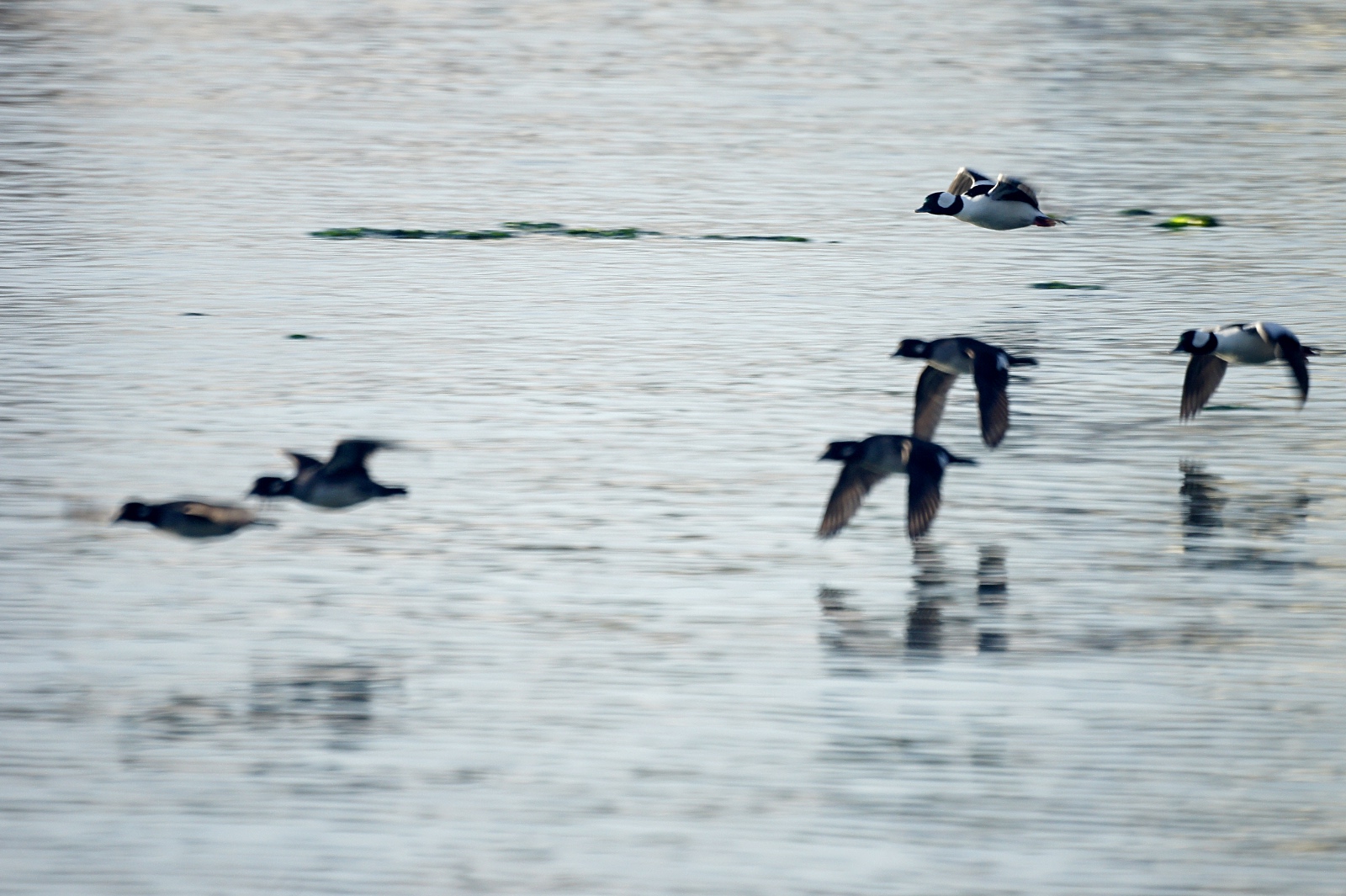
The seal dived and a few moments later all the ducks were in flight. Seals are occasionally known to opportunistically attack sea birds and I suspect these little ducks must look as inviting from beneath the surface as they do above. The event was a little reminder that the animals we observe in these peaceful natural scenes probably see their environment quite differently from how we view it.

Thursday, January 28, 2010

Bird Problems

I mentioned yesterday that I went out to Macaulay Point looking for some different kinds of birds to photograph and I saw some. You can see them too in the above photo. Just look for some tiny dots about the size of a grain of sand swimming foolishly distant from the shore. Oh well, thanks to my telephoto lens I was able to get close enough at least to identify them and shoot the fuzzy photos below. Directly below are a trio of Harlequin Ducks (Histrionicus histrionicus)And below are a pair of nicely posed Bufflehead Ducks (Bucephala albeola). These ducks are much more attractive than my photos indicate - but there really is a problem getting close enough to them. More patience required! They are a delight to watch diving and popping up like little balls.