

Custom Search
Showing posts with label Aix sponsa. Show all posts
Showing posts with label Aix sponsa. Show all posts
Saturday, January 28, 2017
Wood Duck


Saturday, September 6, 2014
Some Ducks
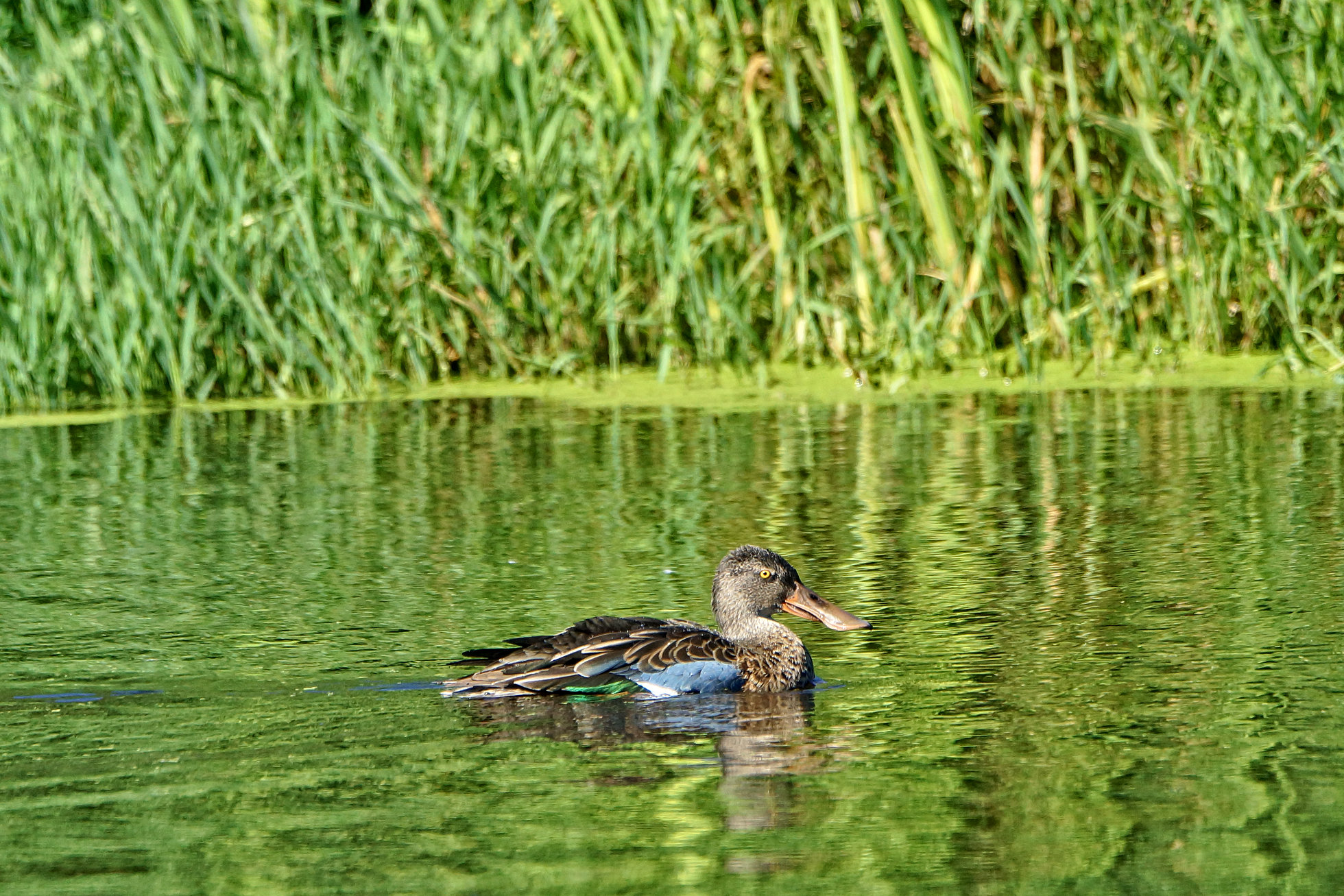 |  |
On the right above is a Wood Duck (Aix sponsa) but once again, for similar reasons, I am unable to be sure whether it is a male or female or a juvenile of either gender. Thanks to the internet I can check these identifications with more knowledgeable people on a local birding forum. I'll let you know what I find out.
Both of these ducks were photographed a few days ago at Swan Lake Nature Sanctuary on the outskirts of Victoria in Saanich.Friday, January 13, 2012
And a Near Miss....
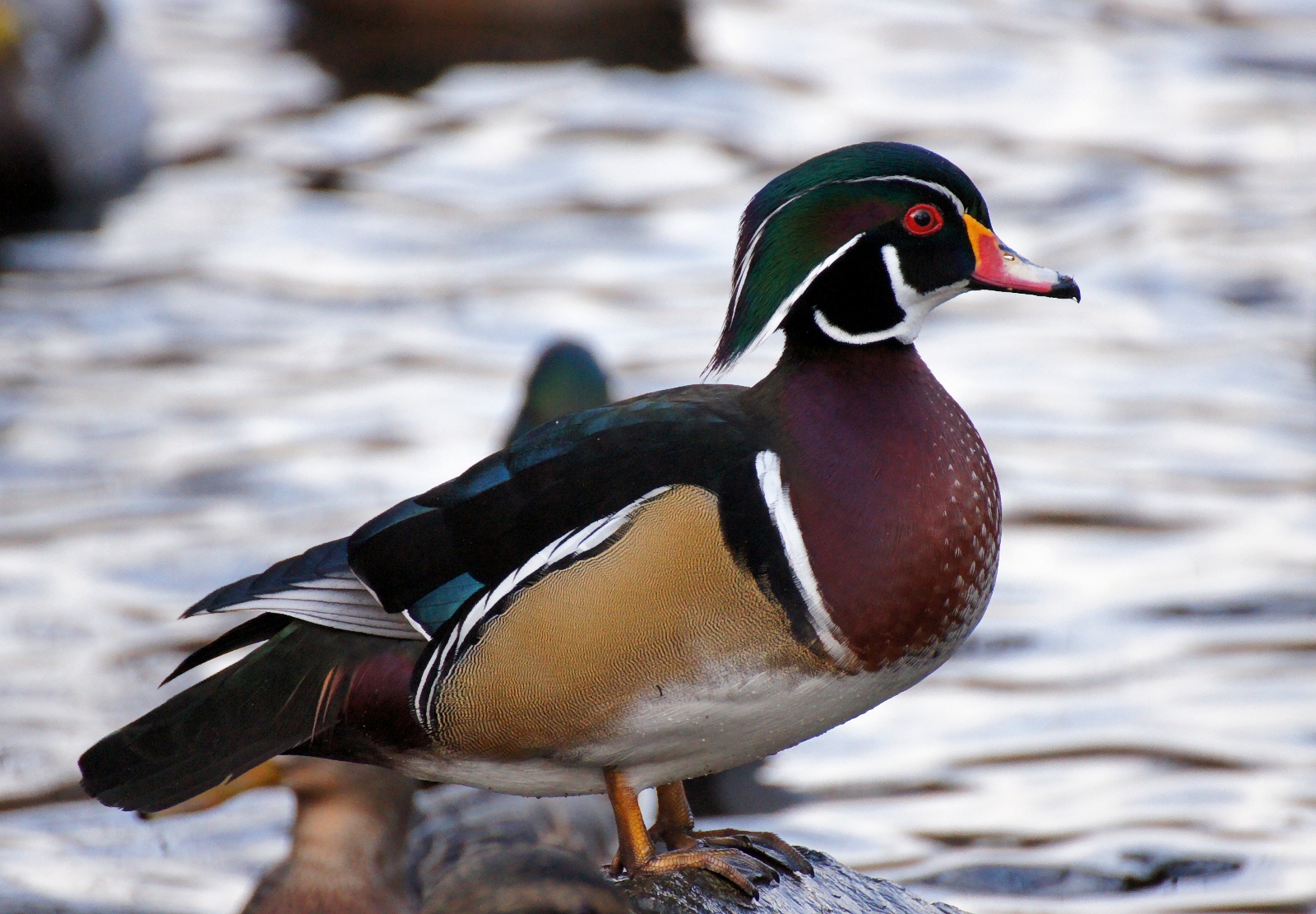
 I'm posting this photo because it's a striking photo that could have been much better if I had been a little more careful. I'm not fishing for compliments here, just sharing some second thoughts. When we first arrived I was so excited to see these ducks that I made some mistakes and I thought I would share them with you. First, I immediately started using my Minolta 500mm lens although these ducks were quite close to me - maybe 5 or 6 meters distance. It has a fixed focal length (i.e. it's not a zoom) and it has a fixed aperture (f8) and this photo would have benefited from a smaller aperture (sharper focus on all parts of the duck's front) and a lesser focal length (about 400mm or so) to include all of the duck with some space above and below to allow cropping. As it is, the top of the duck's head and his feet are missing. (The photos i posted yesterday and the day before were both taken with a Tamron 70-300mm zoom - a better choice of lens for this situation.) Secondly, this photo is not quite level. It's tilted to the right and because rotating it a little to fix this means cropping it I would have to cut quite a bit off the top of the duck's head if I straightened it, so it's not fixable. Oh well, live and learn!
Thursday, January 12, 2012
Wood Duck (Female) (Aix sponsa)

| As you can see the female Wood Duck is not so dramatically colored or patterned as the drake (yesterday's post) but her plumage is a splendid palette of earthy tones with some rich blue and purple and she has a patterning similar to the male on her breast. |  |
Wednesday, January 11, 2012
World's Most Beautiful Duck

| A kind visitor to this blog alerted me to the presence of Wood Ducks (Aix sponsa) in Victoria, courting near a small pond in an obscure little park. I've never seen a Wood Duck before although they have long been on my "must see" list. They are brilliantly colorful and it was very satisfying to see them. Thank you Cheryl. I usually think of ducks as nesting in the reeds near the waterline but Wood Ducks generally nest in cavities up in the trees near water. When the eggs hatch the nestlings simply jump out of the nest, sometimes from very great heights. However, they are so light and fluffy that they usually land safely and are able to follow their mother to water (see the video below). Though not so dramatically decorated as the male (featured in today's post) the females of this species are also very attractively coloured (see tomorrow's post). |  |
Subscribe to:
Posts (Atom)
